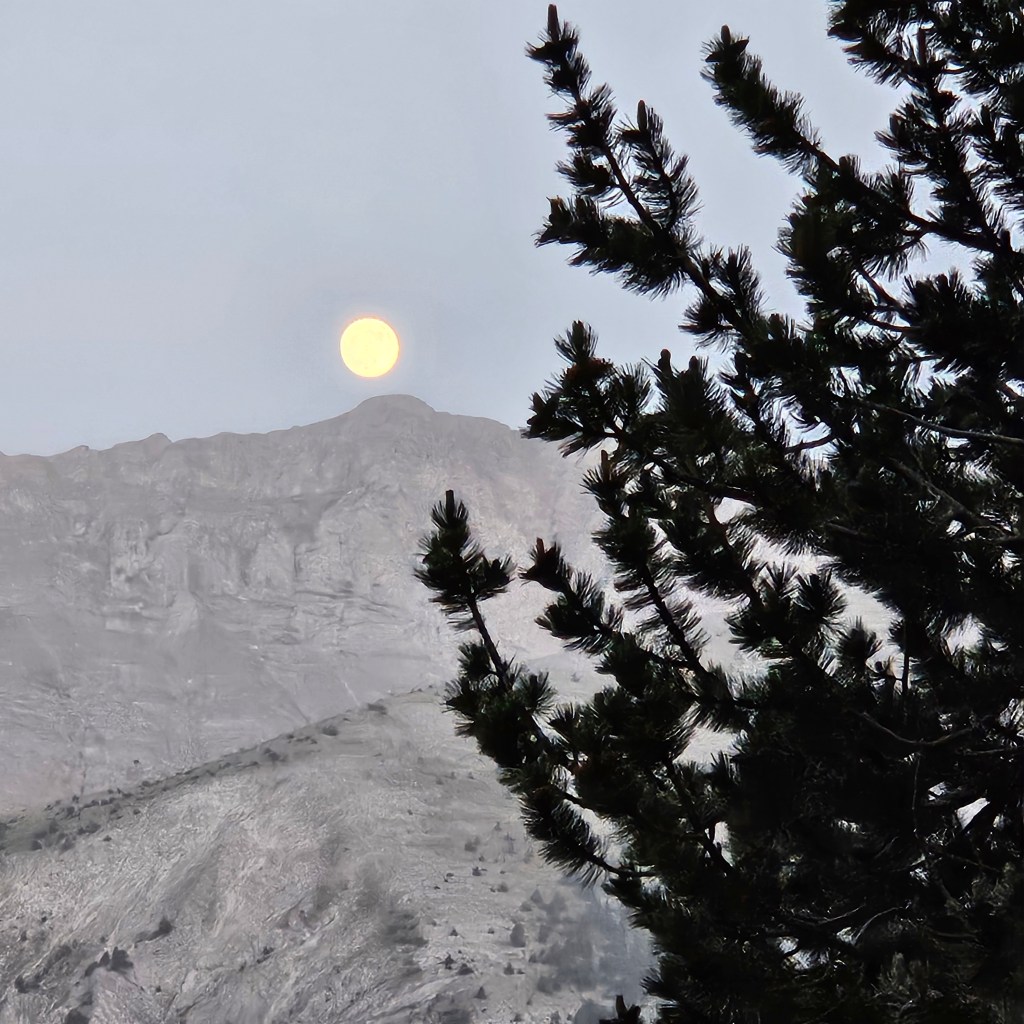
I didn’t really plan on spending the full moon solstice on Mount Olympus, but that’s how it worked out.
Mount Olympus is probably the closest parallel to the North American national park model in Greece. There’s a large visitor center at the base of the mountain with very thoughtful and informative displays, much better than in most US parks, in fact. The mountain has a scenic drive with signs and pullouts and snakes up the lower slopes to a large trailhead, and this being Greece there’s a restaurant. This seems like the final destination for most Greeks; it’s the foreigners who hit the trails.
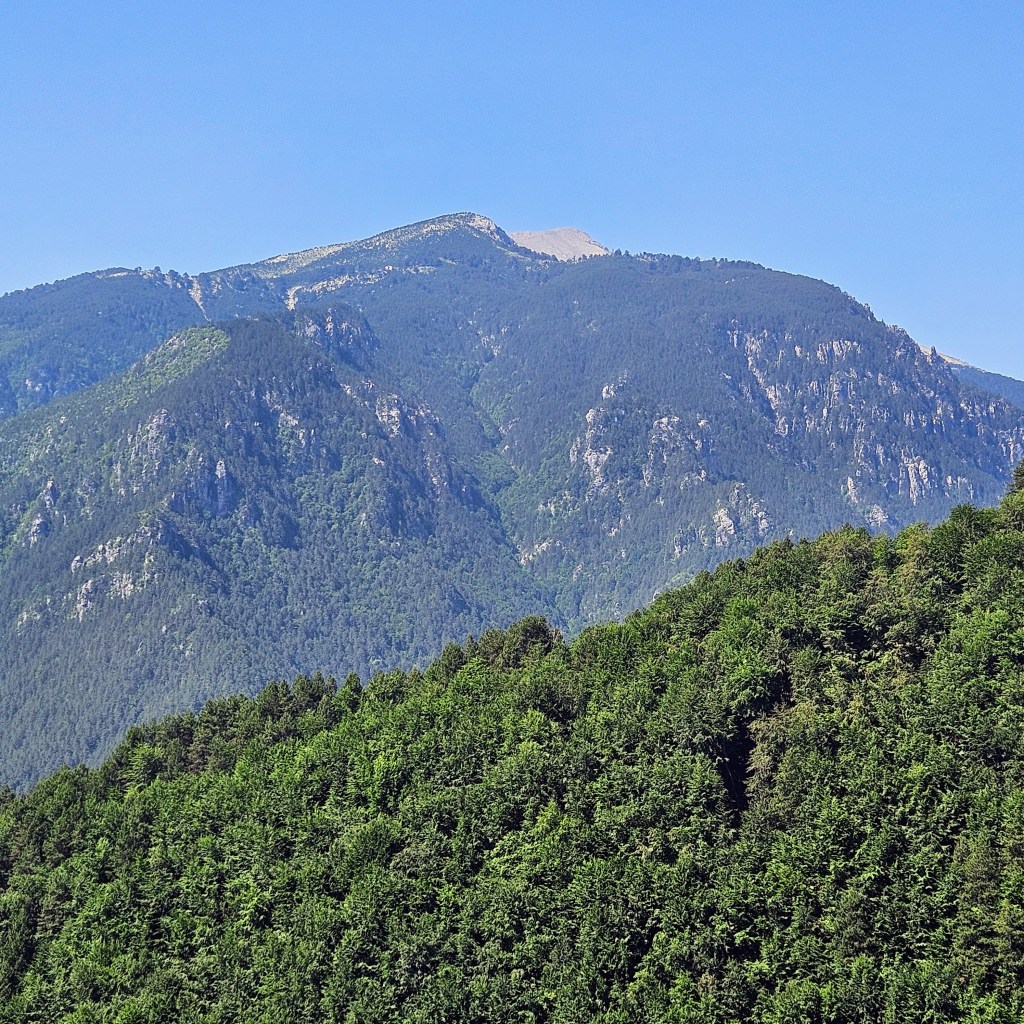
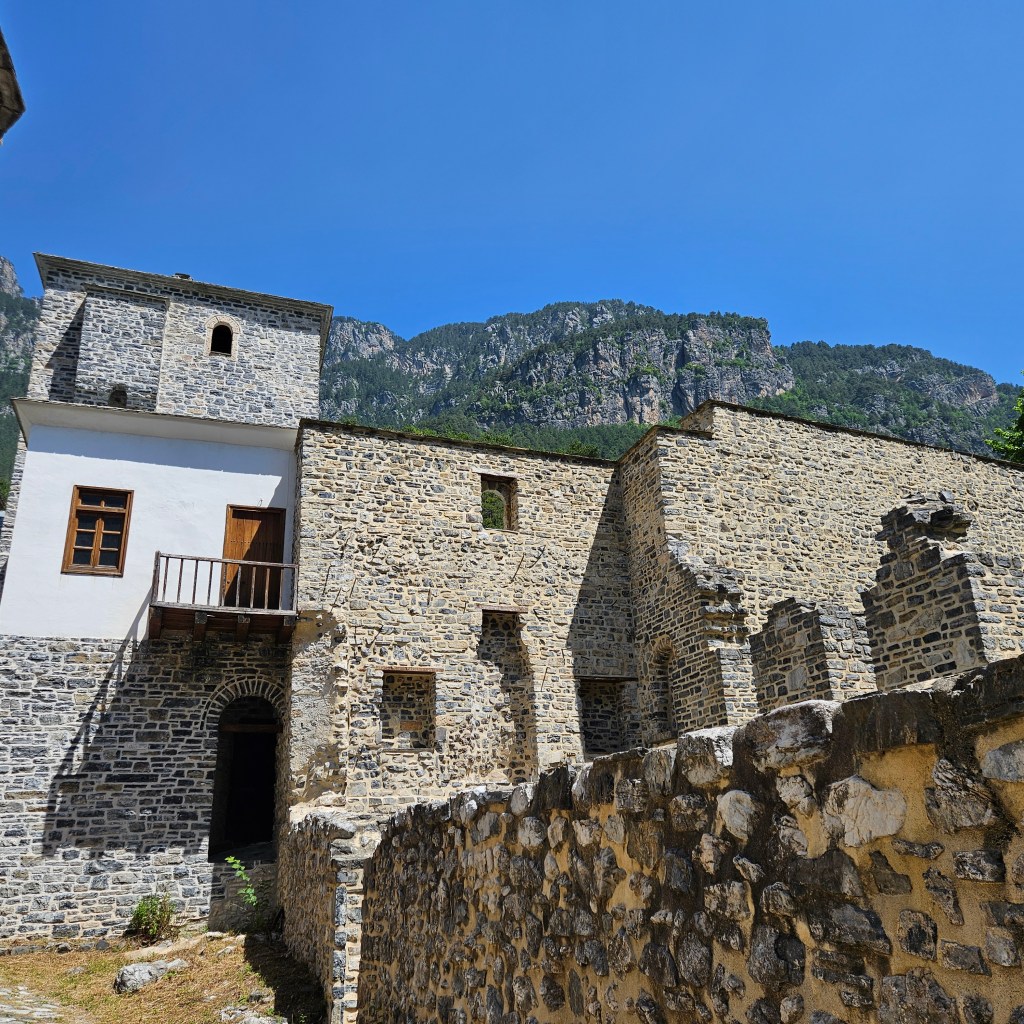
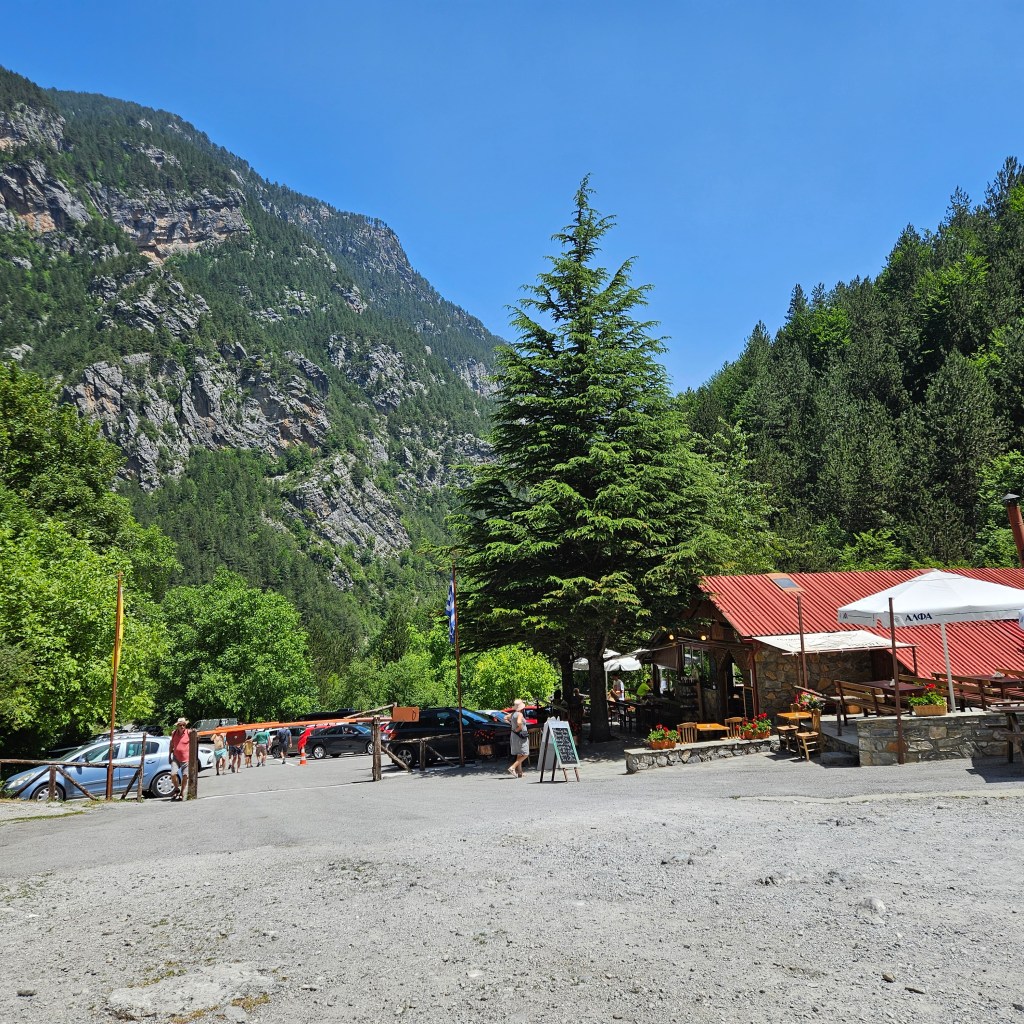
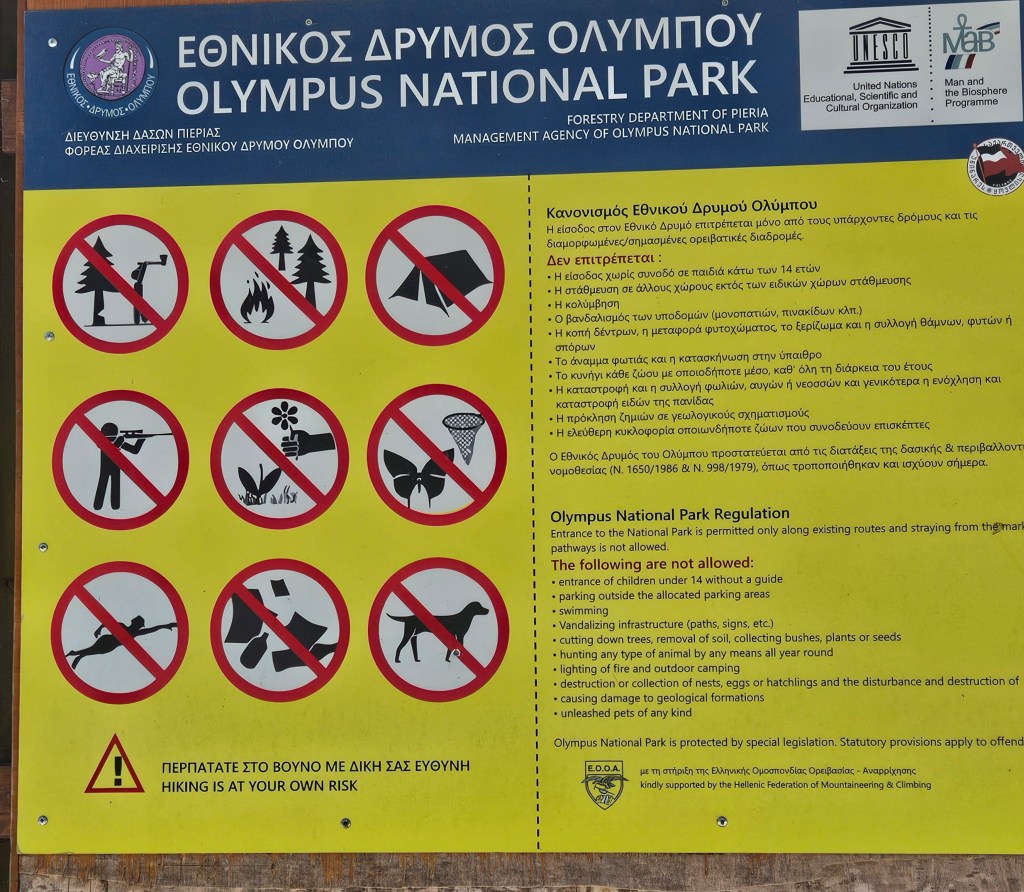
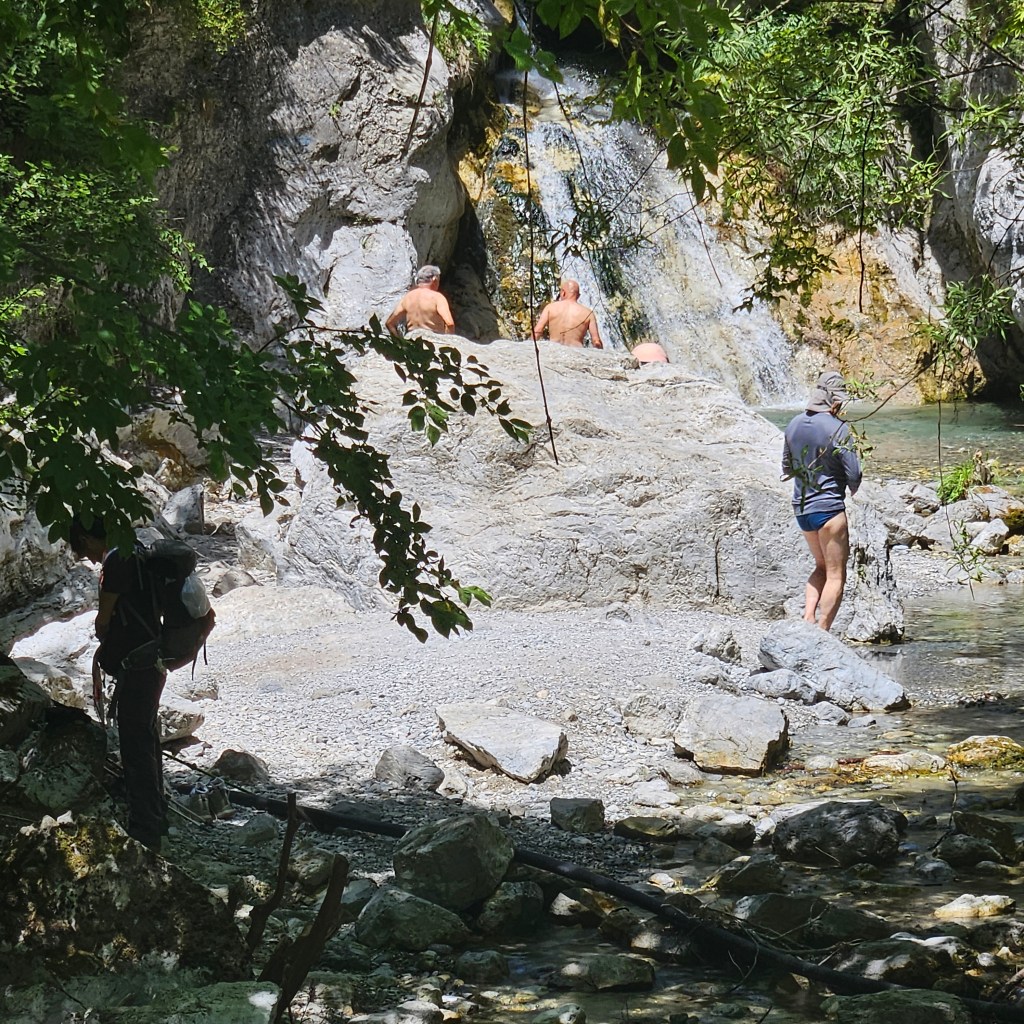
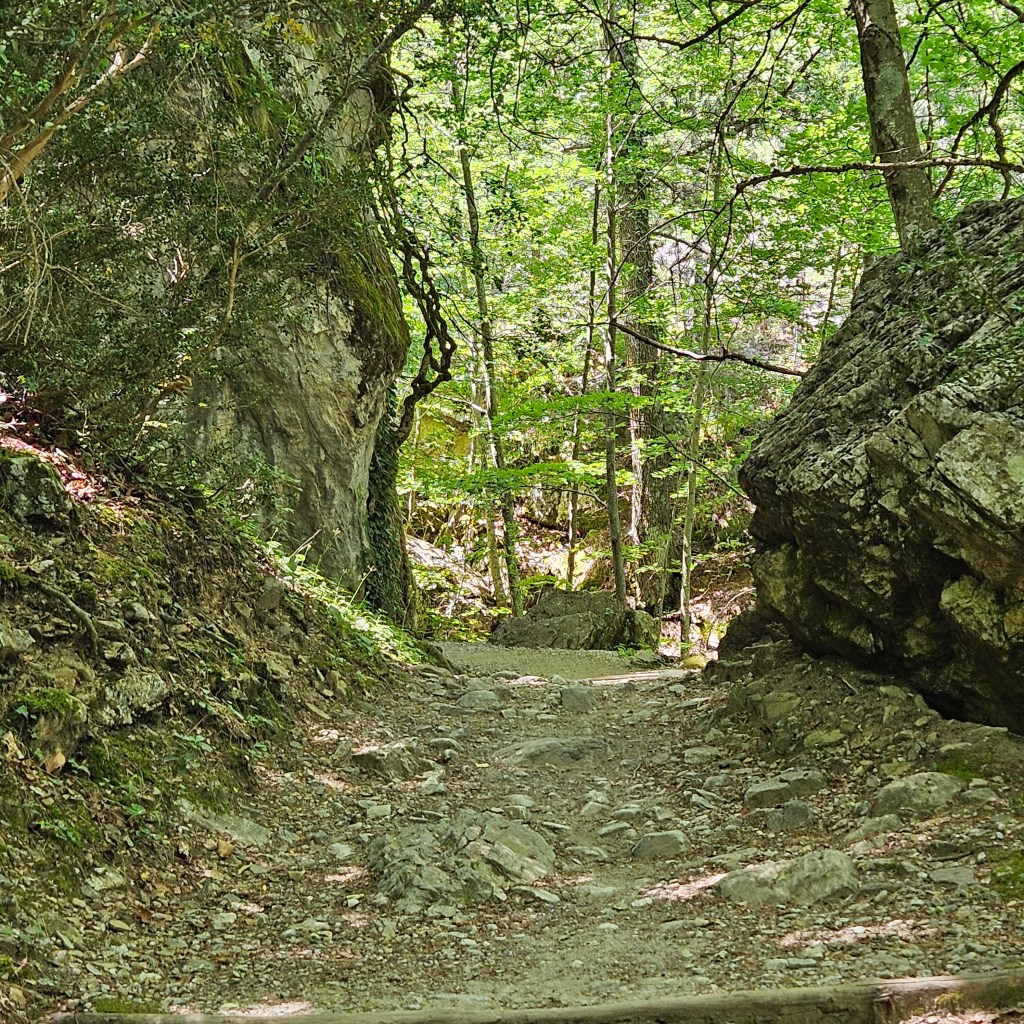
Camping in Greek national parks is prohibited, so the trail climbs 1600 meters to a refugio where you can spend the night before heading on to the summit. The trail to the refugio isn’t terribly long or arduous, but the heat makes it hard. Luckily it winds through a shady forest of oaks and pines before reaching tree line at the refuge. The rare Balkan pines resemble white bark pines- both grow slowly and are beaten by the wind at tree line.
That tree line in Greece is only at 7000 feet, which puzzles me. I was always under the impression that tree line is a function of latitude and that the farther north you go, the lower in elevation the tree line. Mount Olympus is at 40 degree North, the same latitude as Fort Collins, Colorado, where the tree line is 11,000 feet. What accounts for this 4000 feet difference?
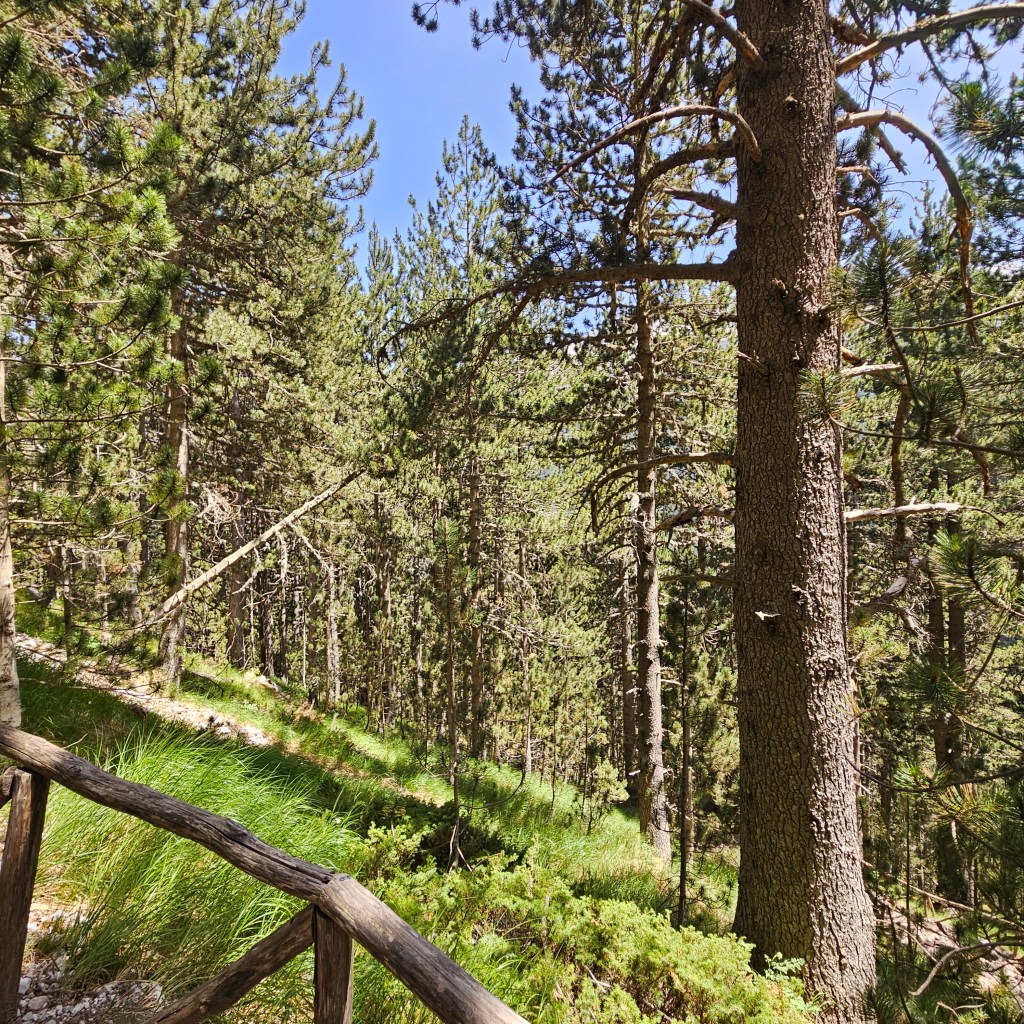
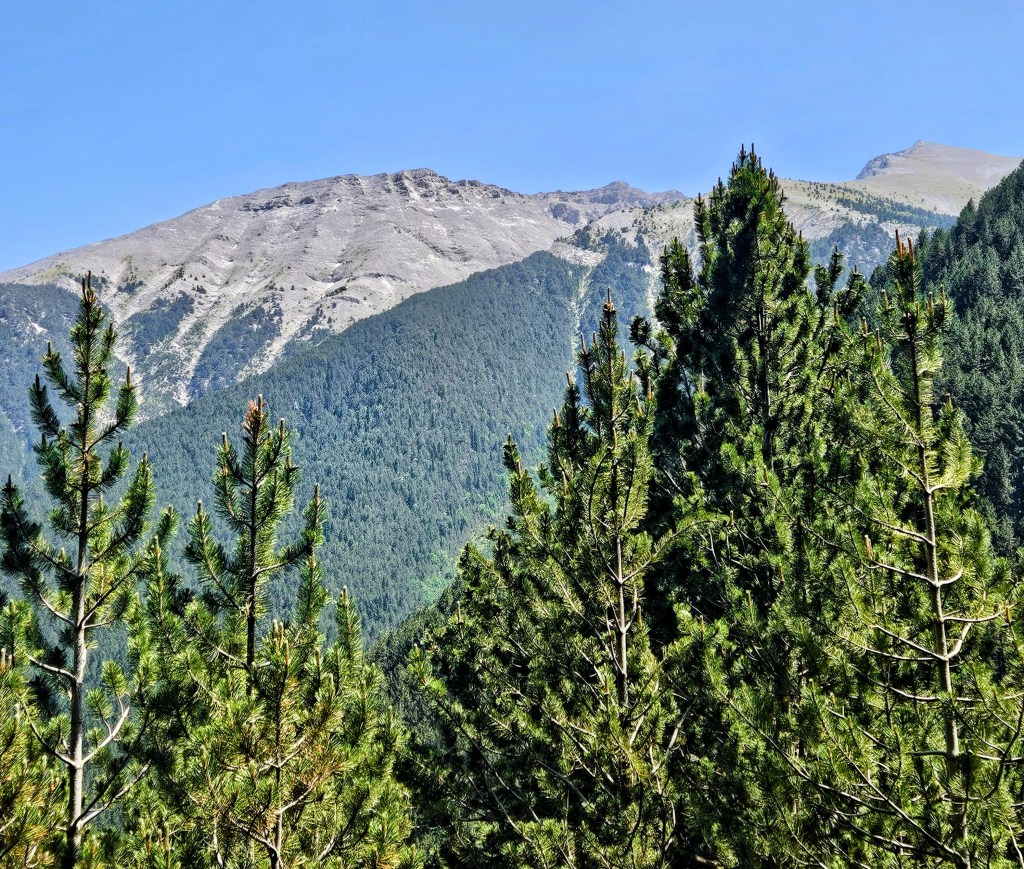
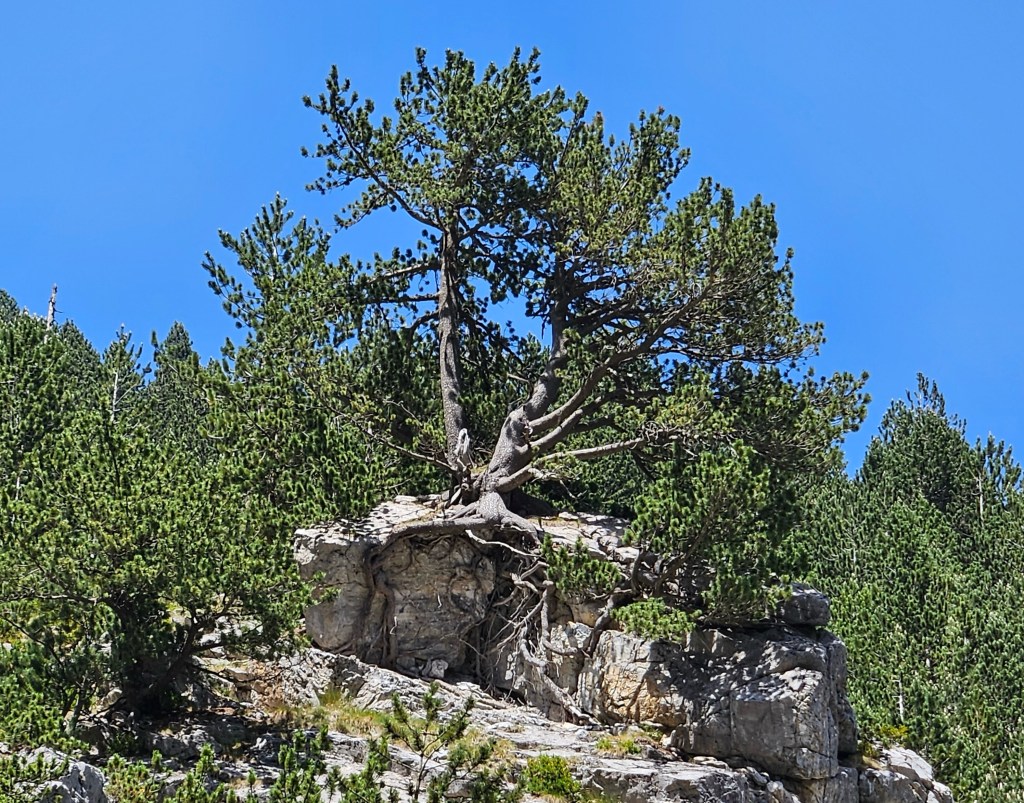
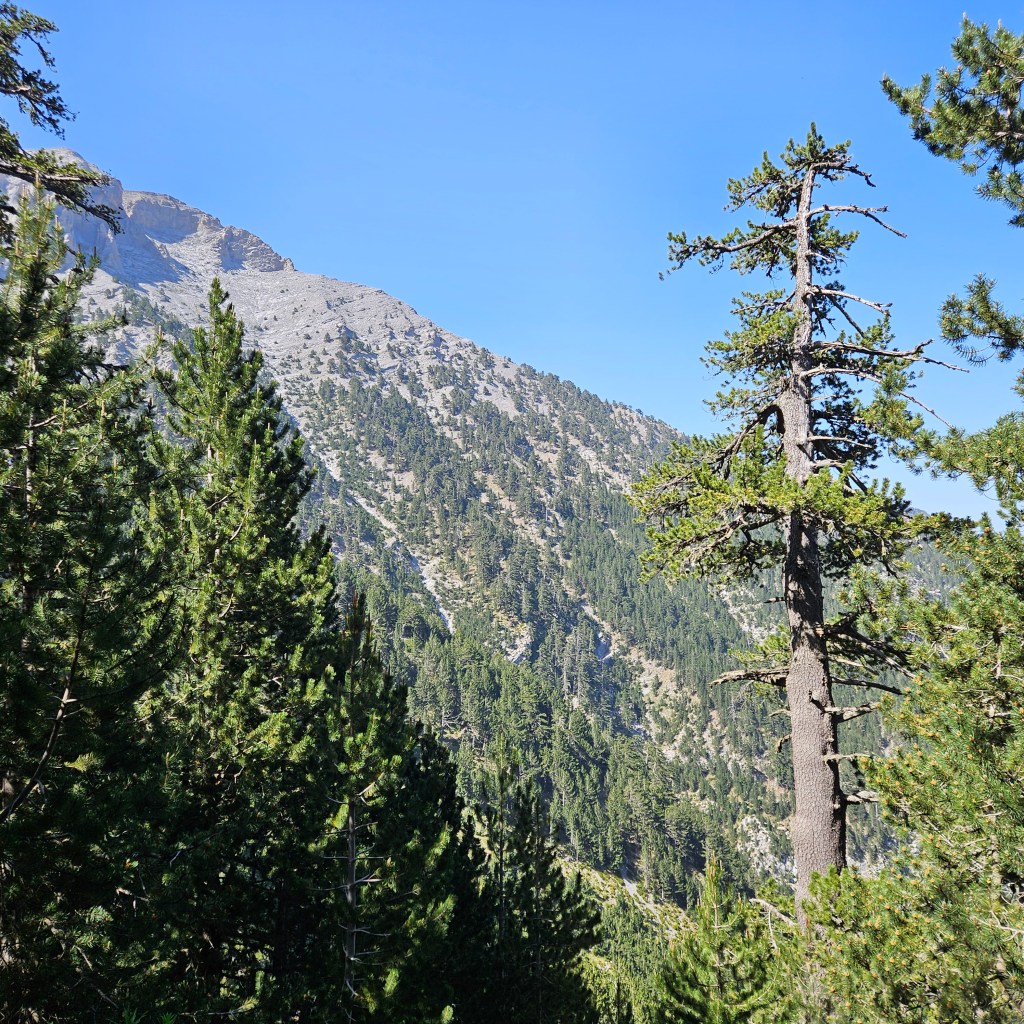
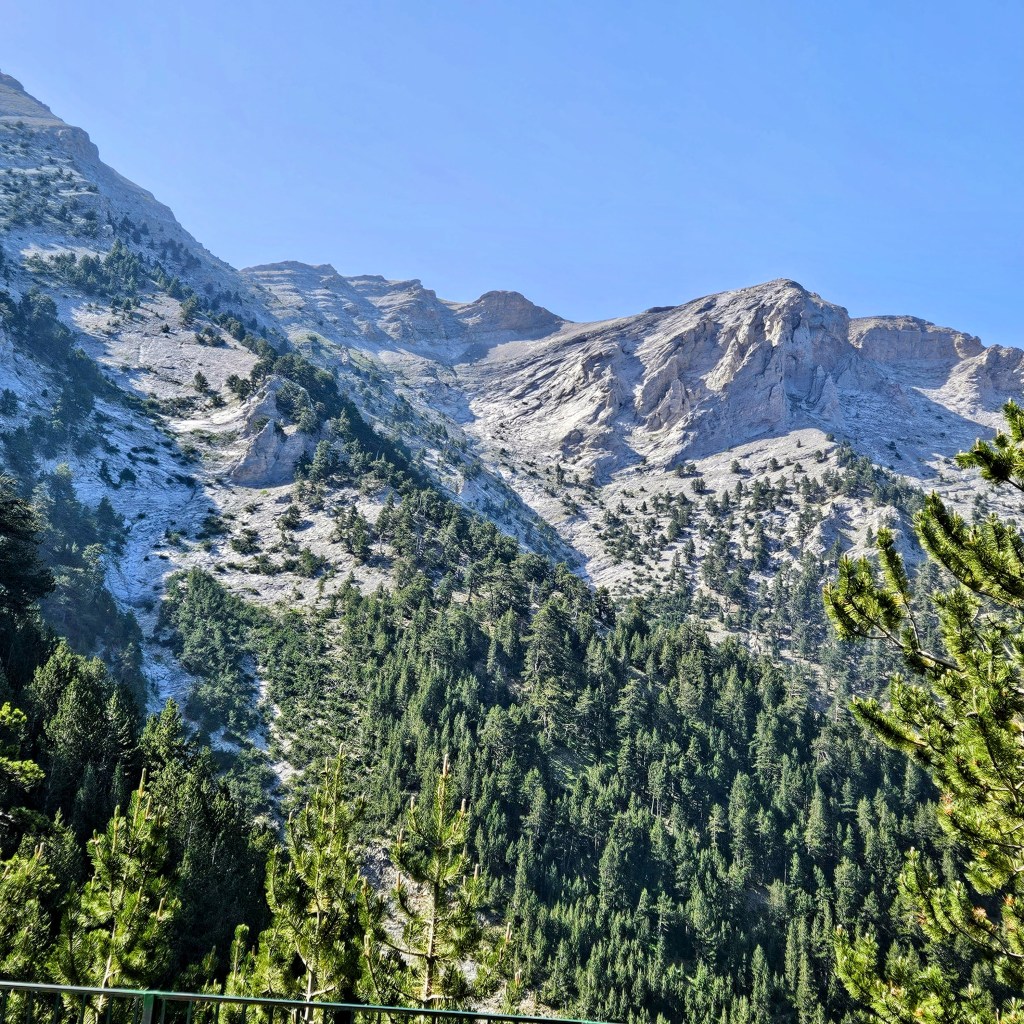
From the refugio, I can catch glimpses of the Aegean Sea far below as the mountain rises practically from sea level. I imagine that the storms and winds rolling off the ocean and pummeling the slopes is a major factor. But I can’t ignore the thousands of years of human presence; despite the claim of being forbidden to mortals, no doubt the slopes of Olympus (and all the other mountains of the Mediterranean) have witnessed eons of grazing by sheep and goats.
Regardless Olympus is an impressive massif. with numerous draws, peaks, canyons and aspects, it’s topography is as complex as the Greek pantheon. All this complexity and elevation gradient combine to produce numerous micro habits and incredible vegetative diversity.
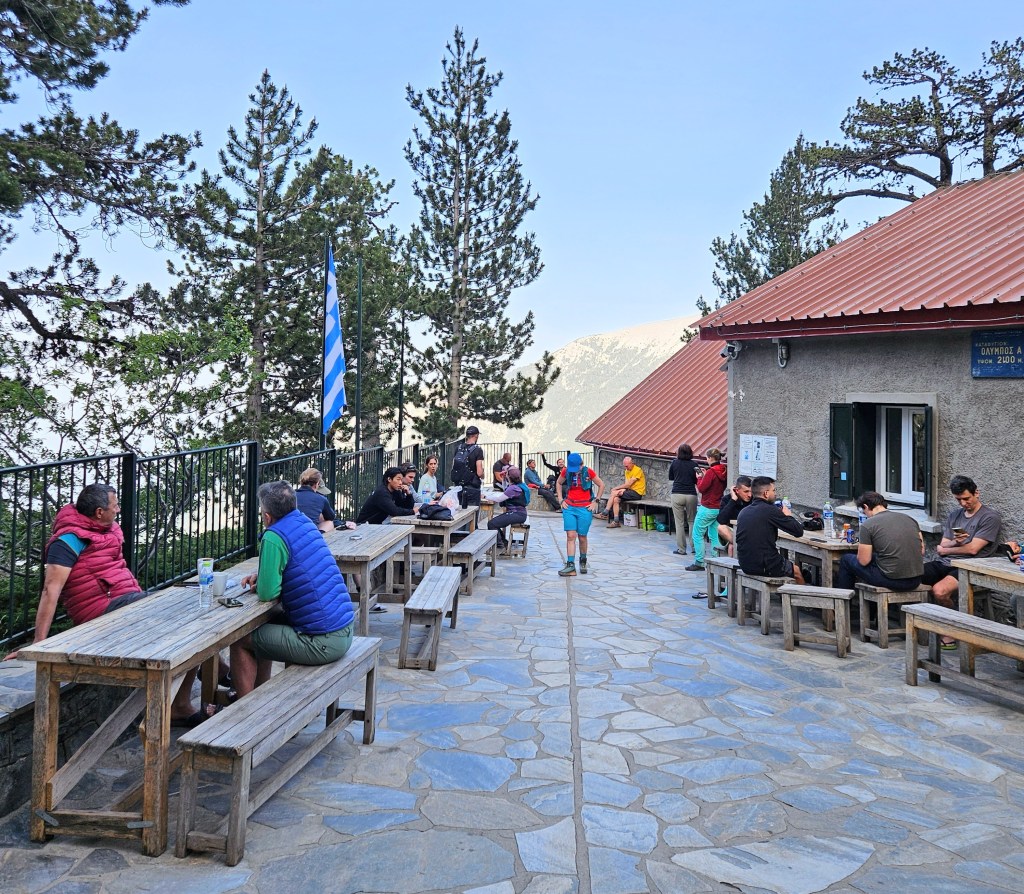
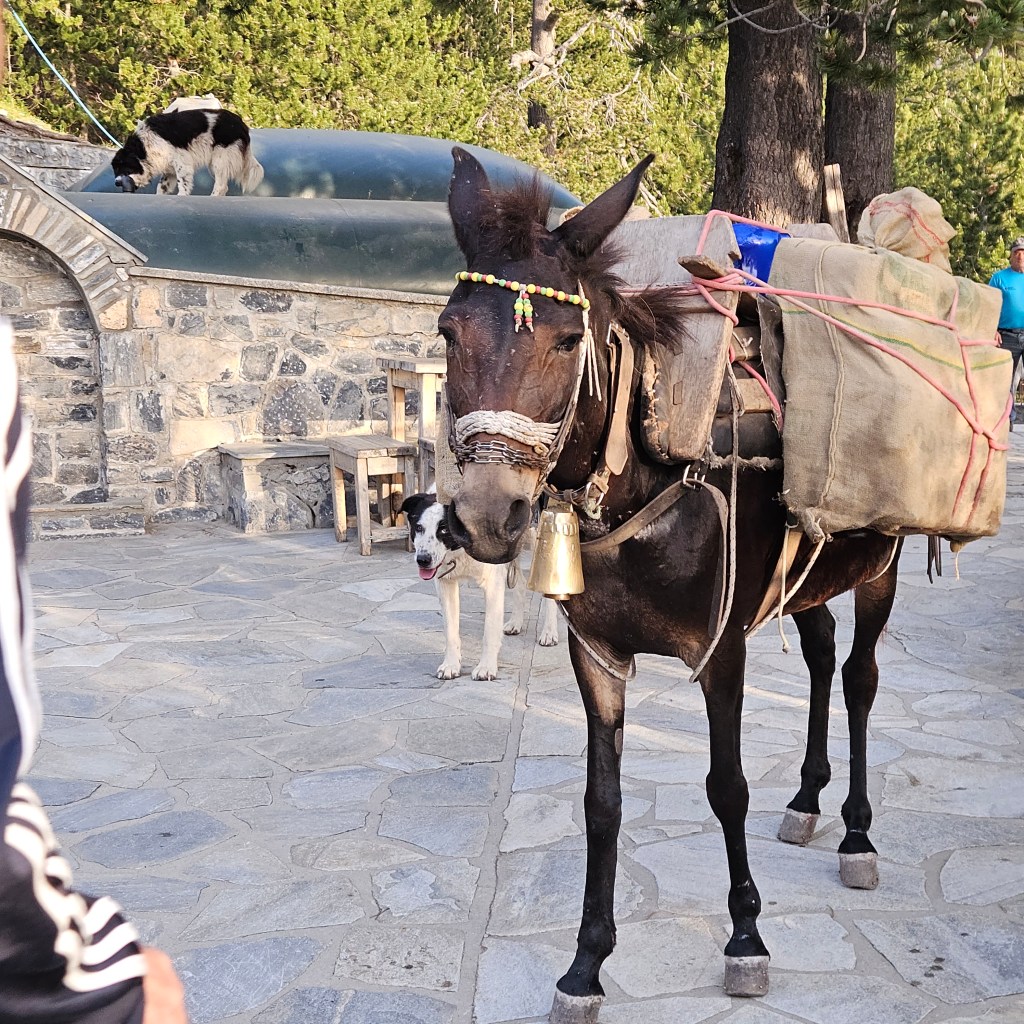
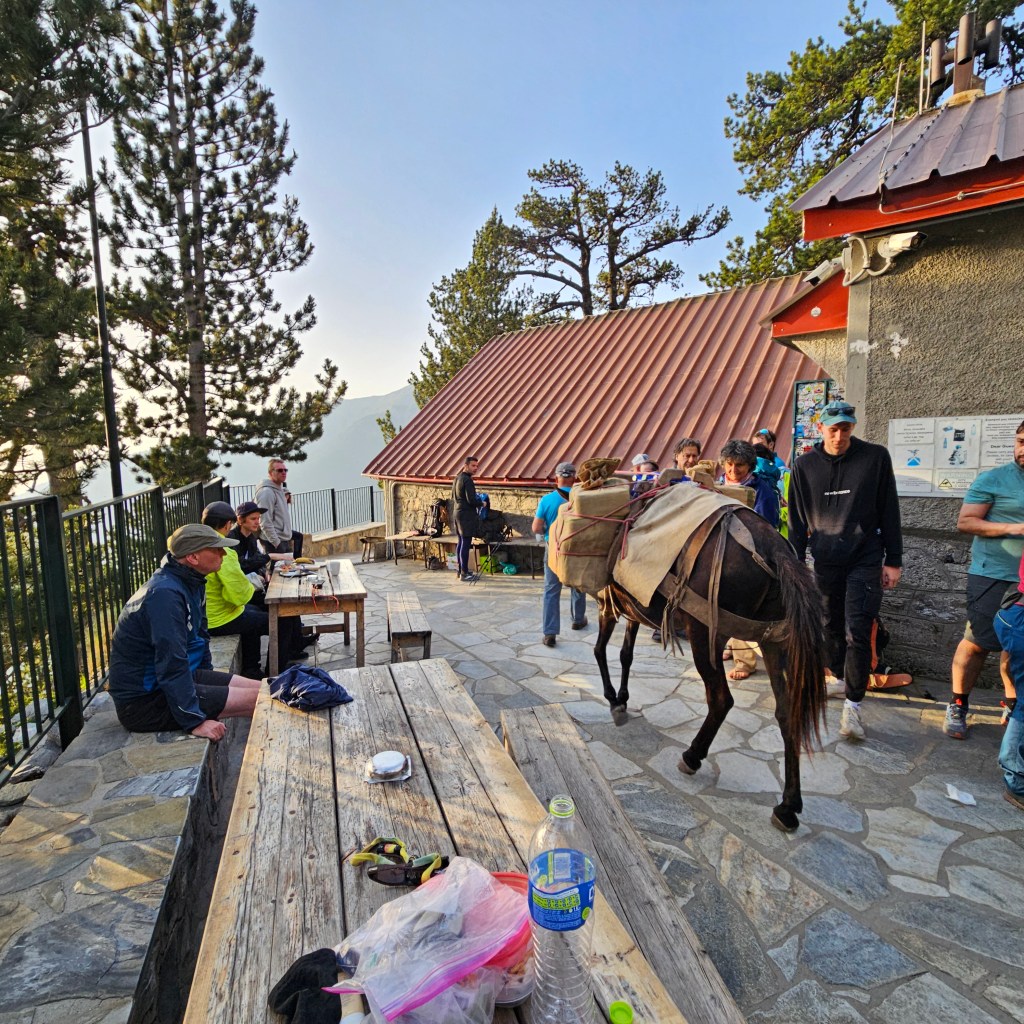
The refugio is an interesting way of managing use. It certainly concentrates the people but also has a significant impact itself. It has beds for 100, divided into multiple dormitories and it’s usually full this time of year requiring advance reservations. It serves full meals and even beer and wine, all brought in by horses and helicopters every day. It also has cell service and electricity. The refugio is frequented primarily by Europeans. The only other Americans are a group of 5 boys scouts and their dads from California.
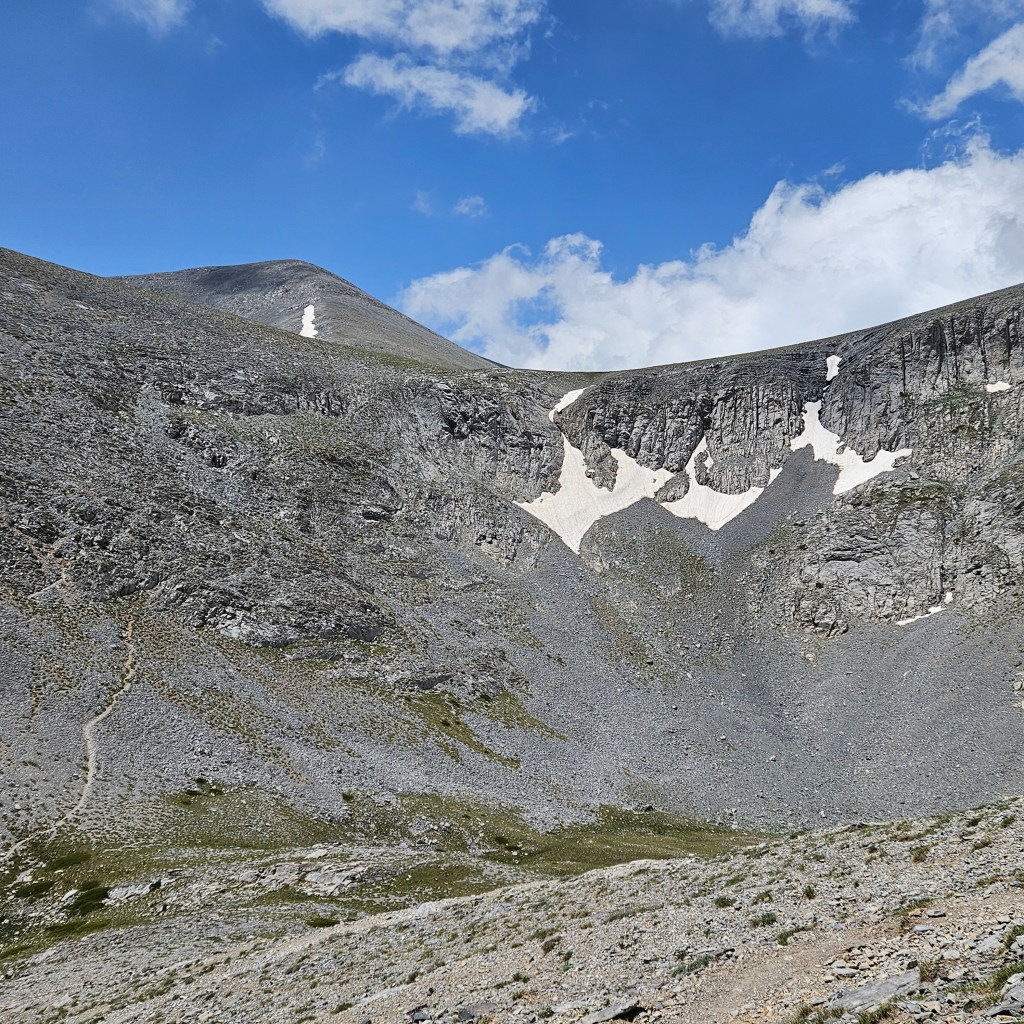
The next day, I awake at dawn a bit before most others and, after coffee and breakfast, begin my ascent plodding steadily up. In a couple hours the trail reaches a wide alpine valley ringed by several peaks with patches of snow dotting the northern most slopes. The gray basin has the effect of an immense amphitheater. It’s easy to imagine this as the home of the gods with superhuman beings dwelling across the vast Plateau of the Muses in the clouds.
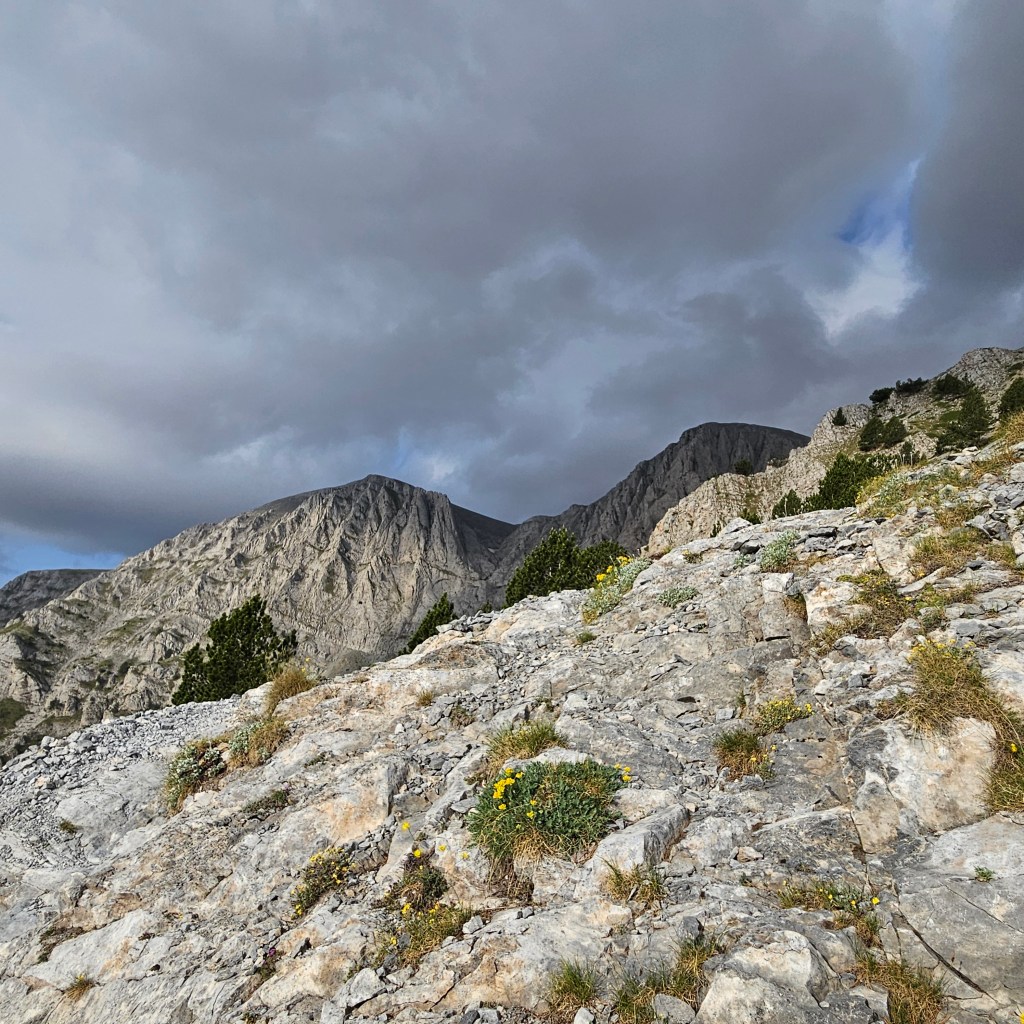
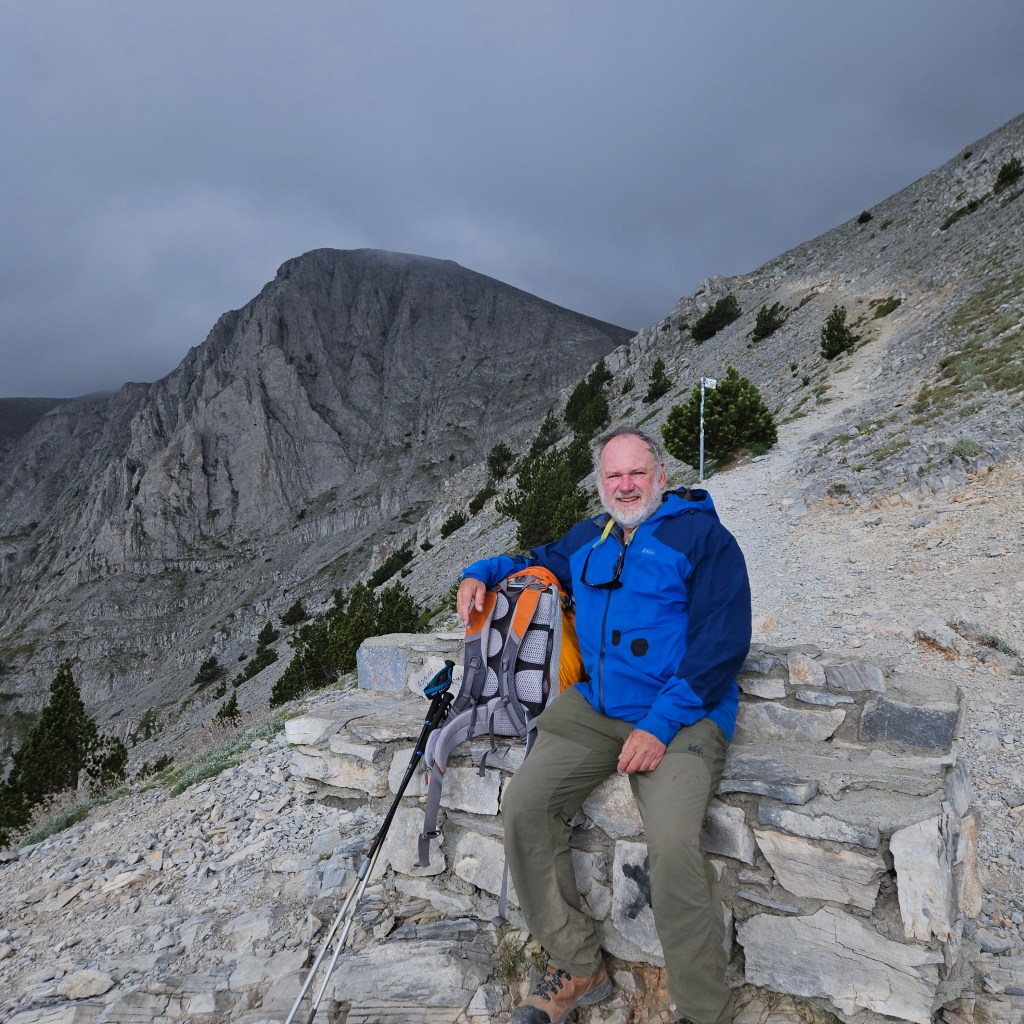
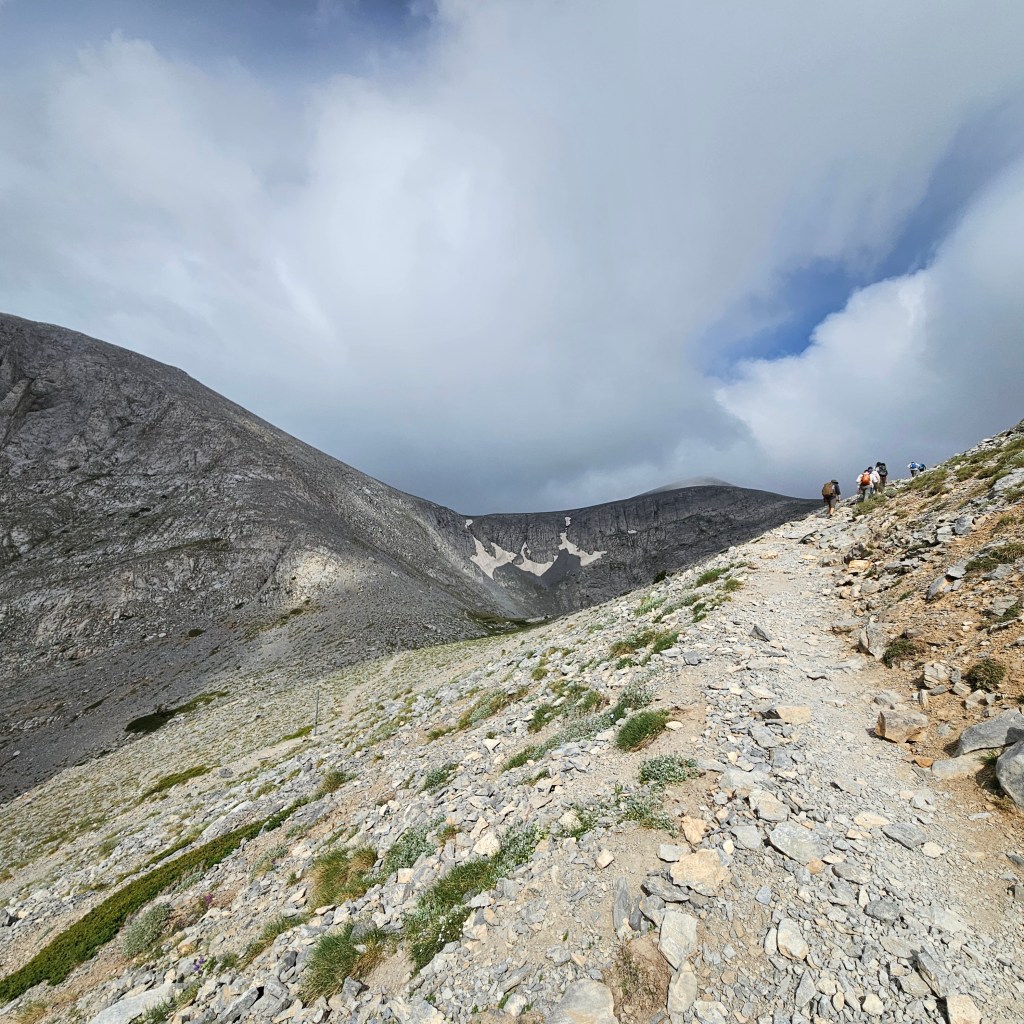
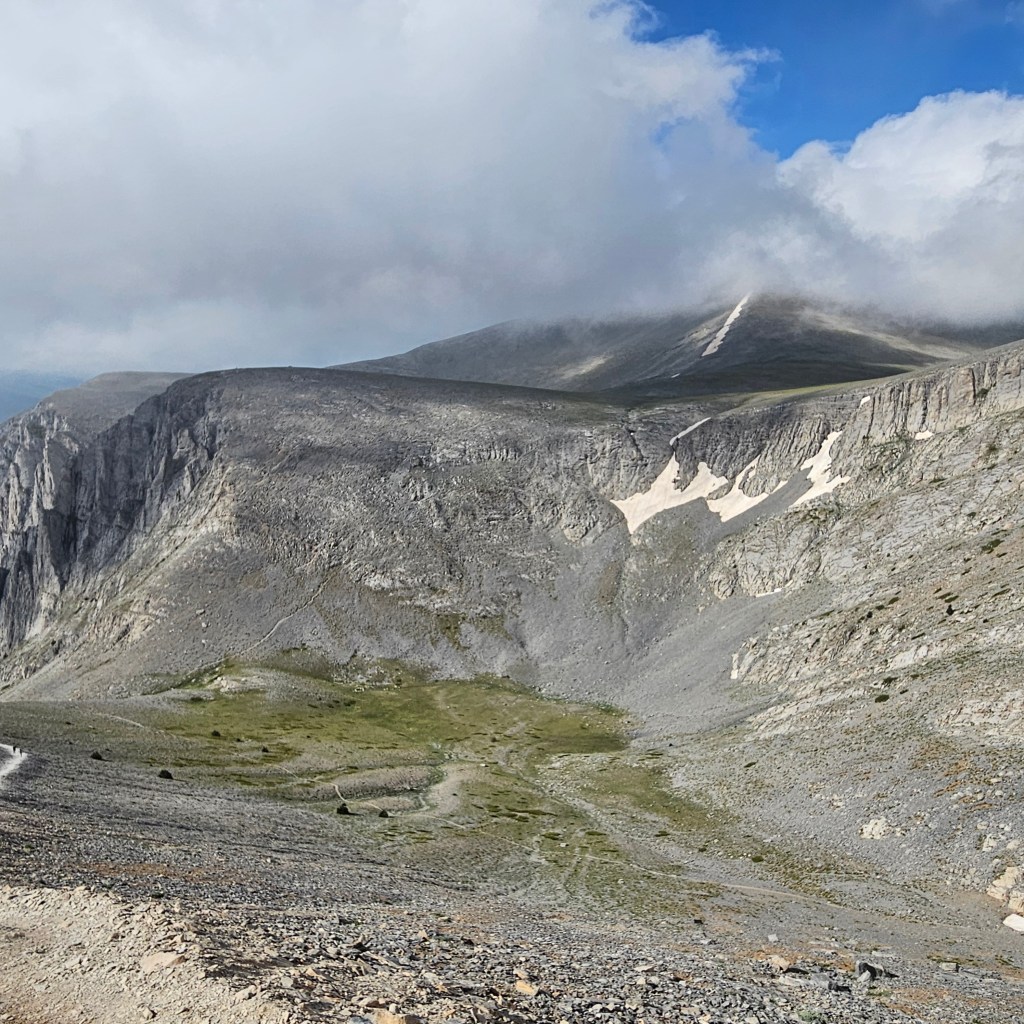
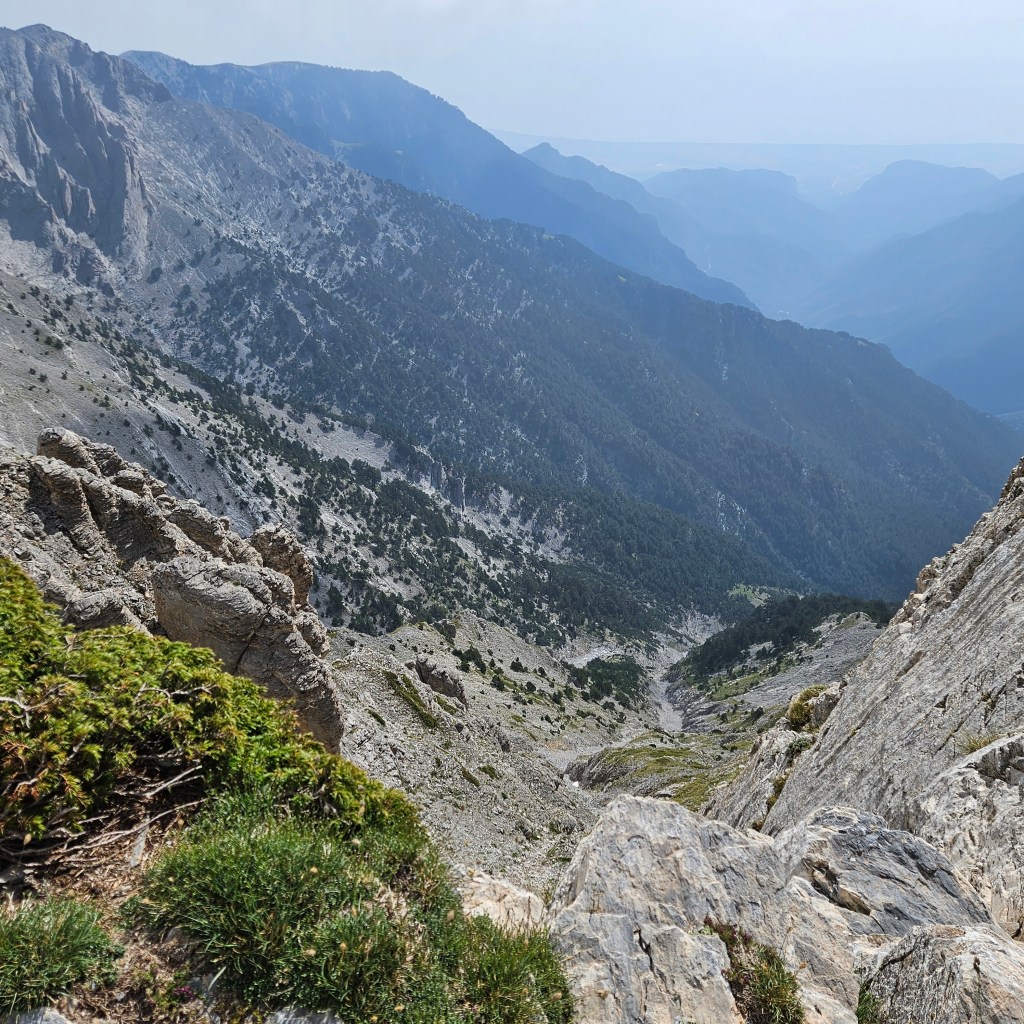
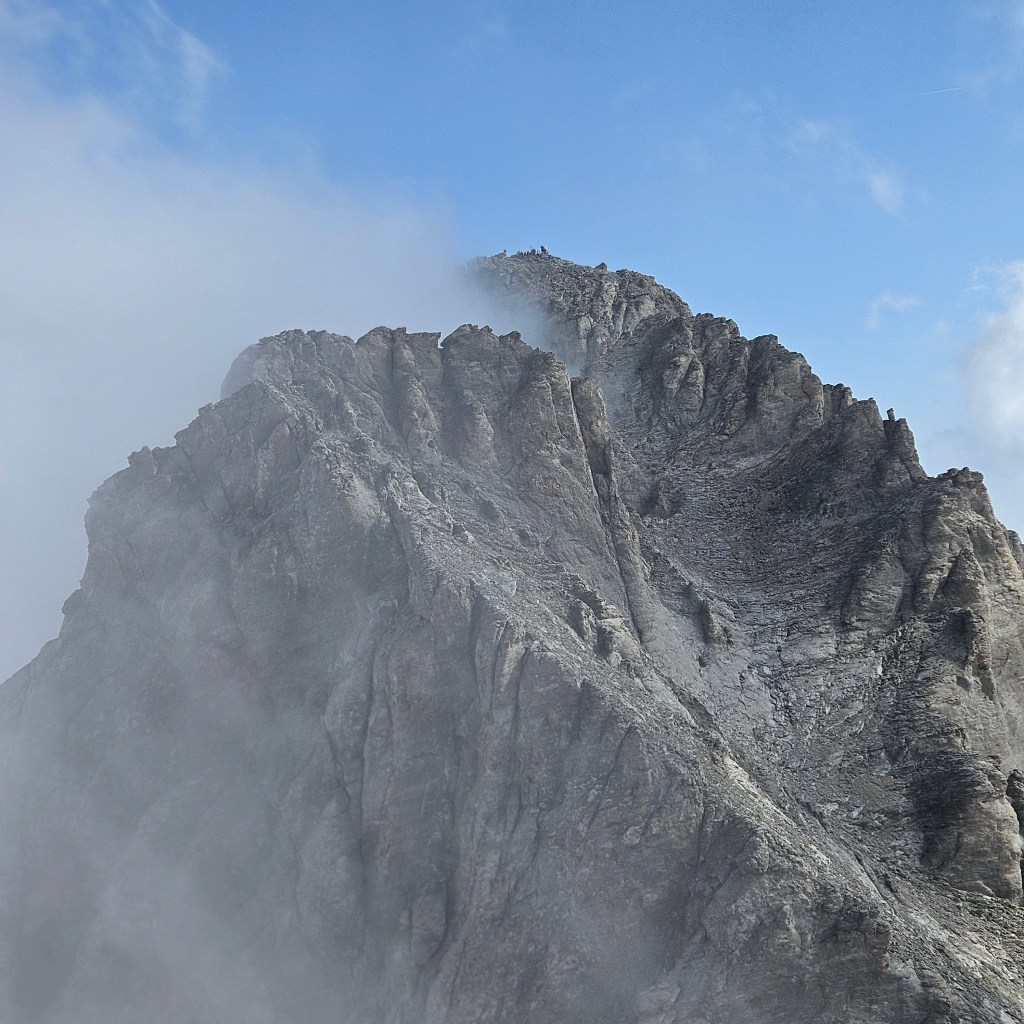
The first summit is Skala at 9450 feet. From here, Mytikas, the rocky knob known as Zeus’s Throne is shrouded in a swirling mass of clouds. Every so often when the clouds break, I can see a long line of people waiting for their turn to stand on the small summit. I have it in my head that climbing Mt. Olympus should be a spiritual endeavor, so eschewing Mytikas, I head off to Skolio, the second highest summit and reported abode of Artemis.
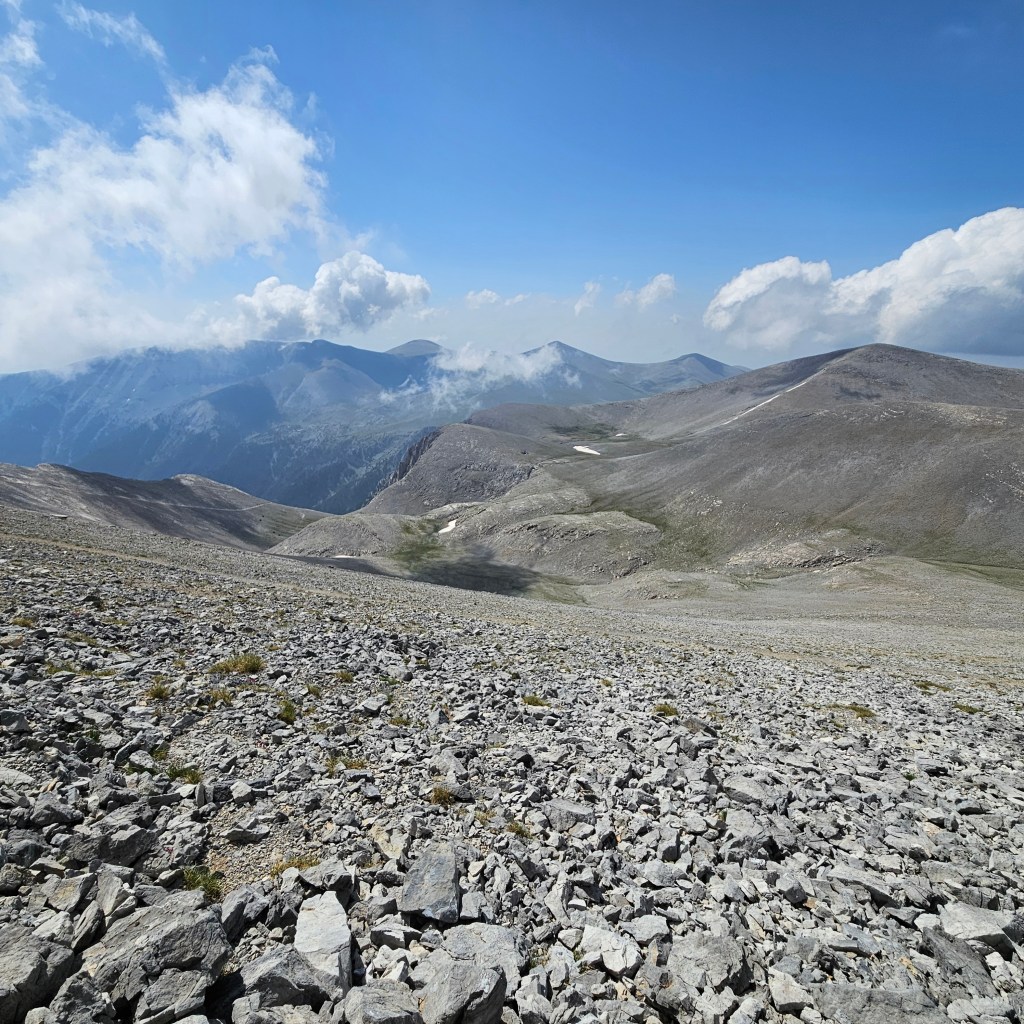
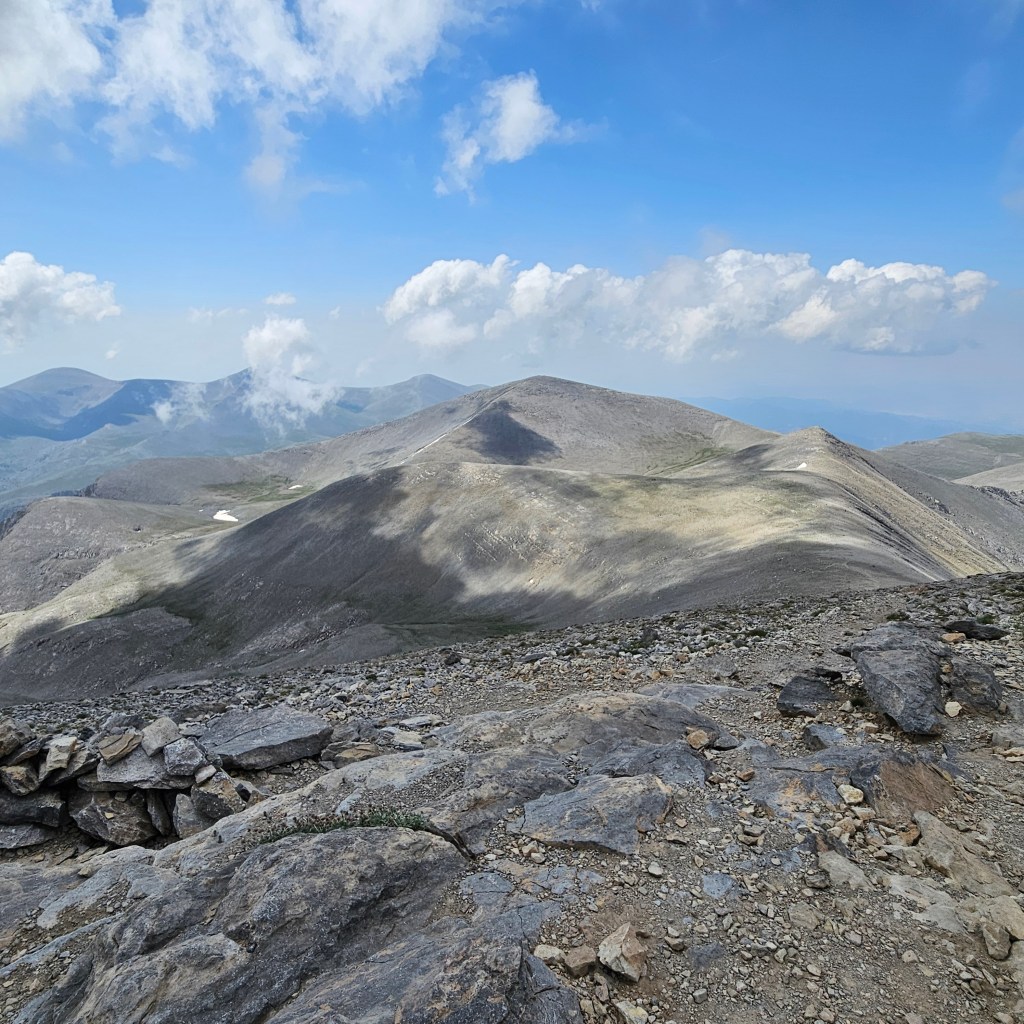
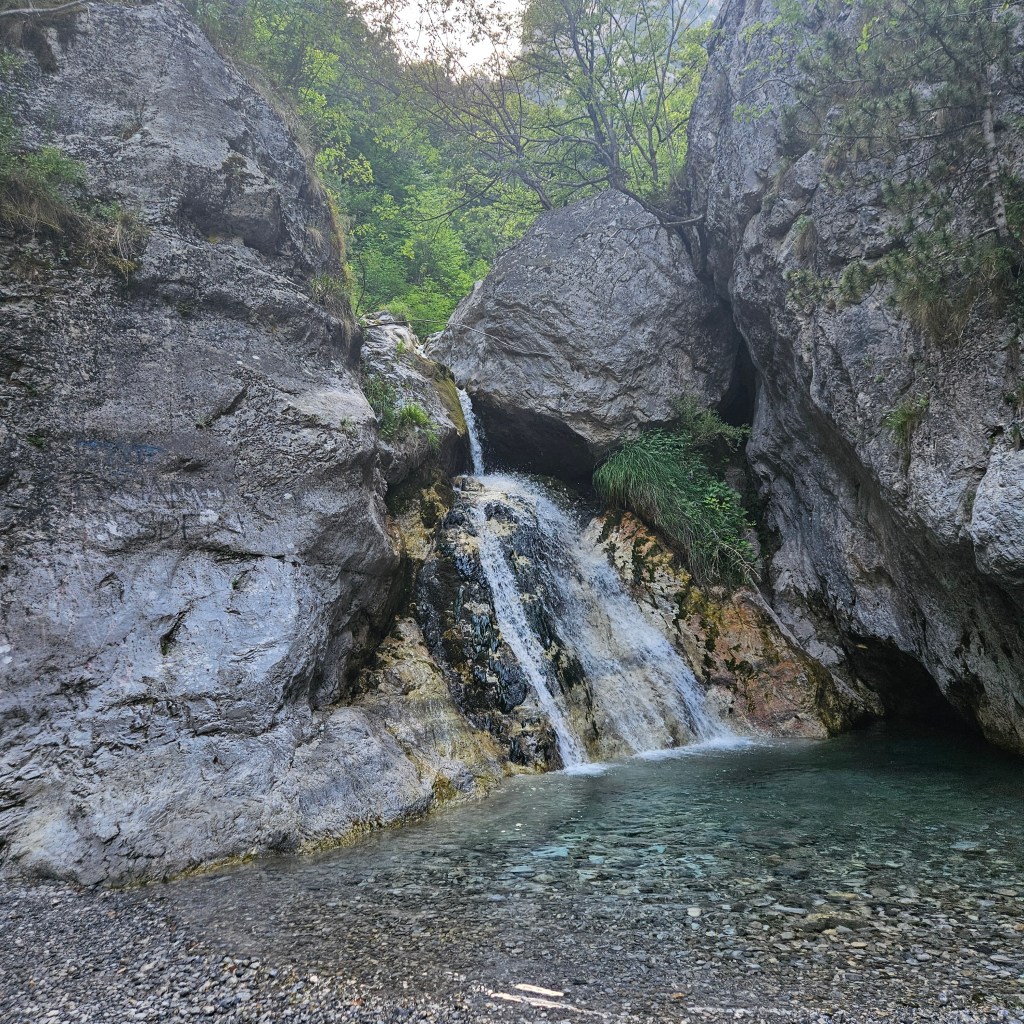
After an hour of blissful solitude with just the spirit of Artemis for company, I begin the long and grueling descent. After a knee crunching 6000 vertical feet in 6 miles I make it back to the trailhead just before the restaurant closes and cap the day with goat stew and a liter of Greece’s finest lager.
 Rewilding Urban Rivers
Leave a comment