Prespa Lakes National Park, established in 2000, challenges the North American conception of a national park, and depending on your perspective, either dilutes and diminishes the very idea of a national park or presents a holistic and innovate way of approaching how humans interact with their landscape.
This transboundary park consists of 2 lakes in 3 countries. Ringed by rugged mountains, the smaller lake, primarily in Greece, flows into the larger lake, shared between Greece, Albania, and North Macedonia. The two lakes formed along a fault line which created a wide valley between two geologically distinct mountain ranges, and the substrate largely determines the vegetation. The granitic mountains to the east yield beech forests while the limestone range on the west create the conditions for oak and juniper.
Lesser Prespa Lake is ringed by wetlands of international importance, harboring over 100 bird species, including the world’s largest population of Dalmatian pelicans. Beyond the wetland fringe lie agricultural fields of hay, tomatoes, and beans. Locals in pickups and vans loaded with all types of beans in small bags, hawk their wares along the lakeshore.
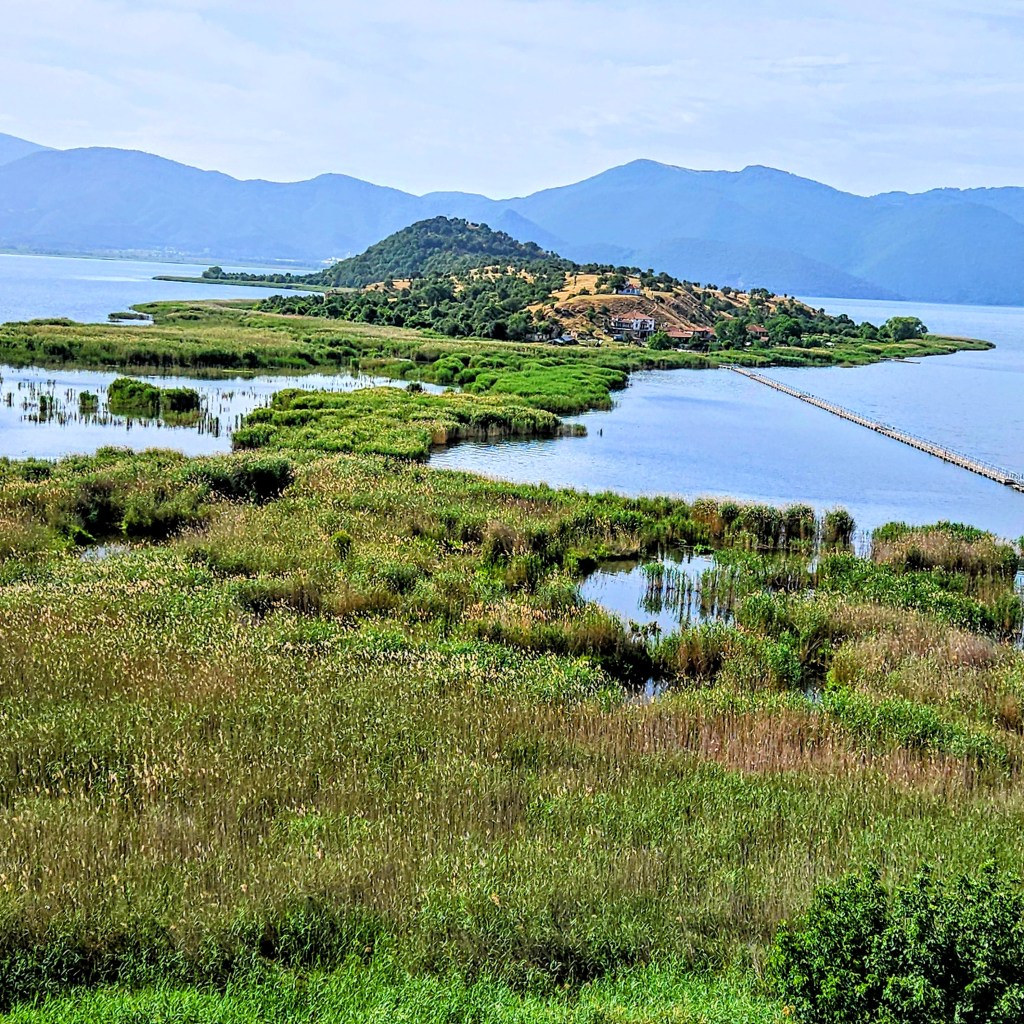


On my first day here, I park at end of 200 meter floating walkway that connected the mainland to a nearby island, Agios Achillios. Strolling across the wetlands, I spot herons, egrets, graylag geese, grebes and coots, in addition to the colony of pelicans, Upon reaching the island, I’m surprised to see cows mucking about among the reeds—“not much of a protected wetland”—I think. The “village” consists of about 6 dwellings but it’s hard to tell which ones are inhabited by humans or livestock or abandoned.


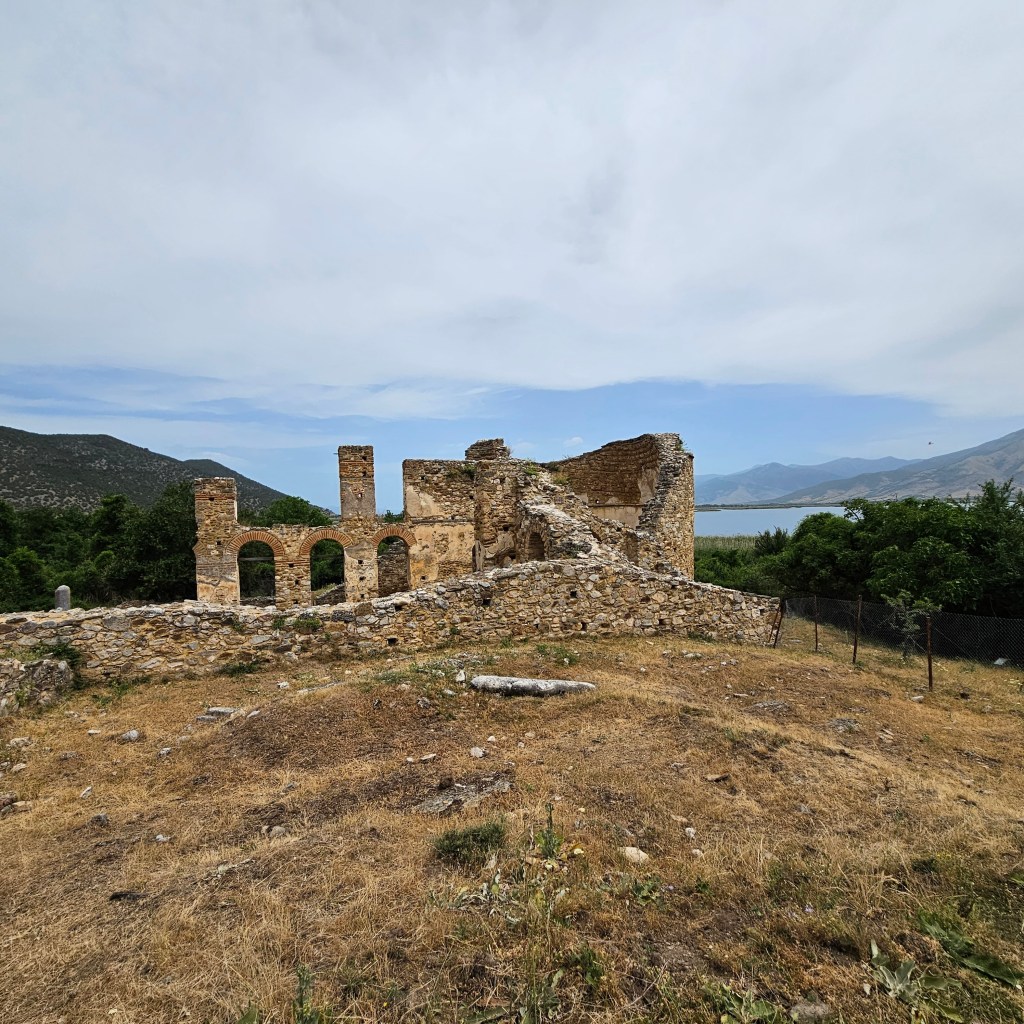
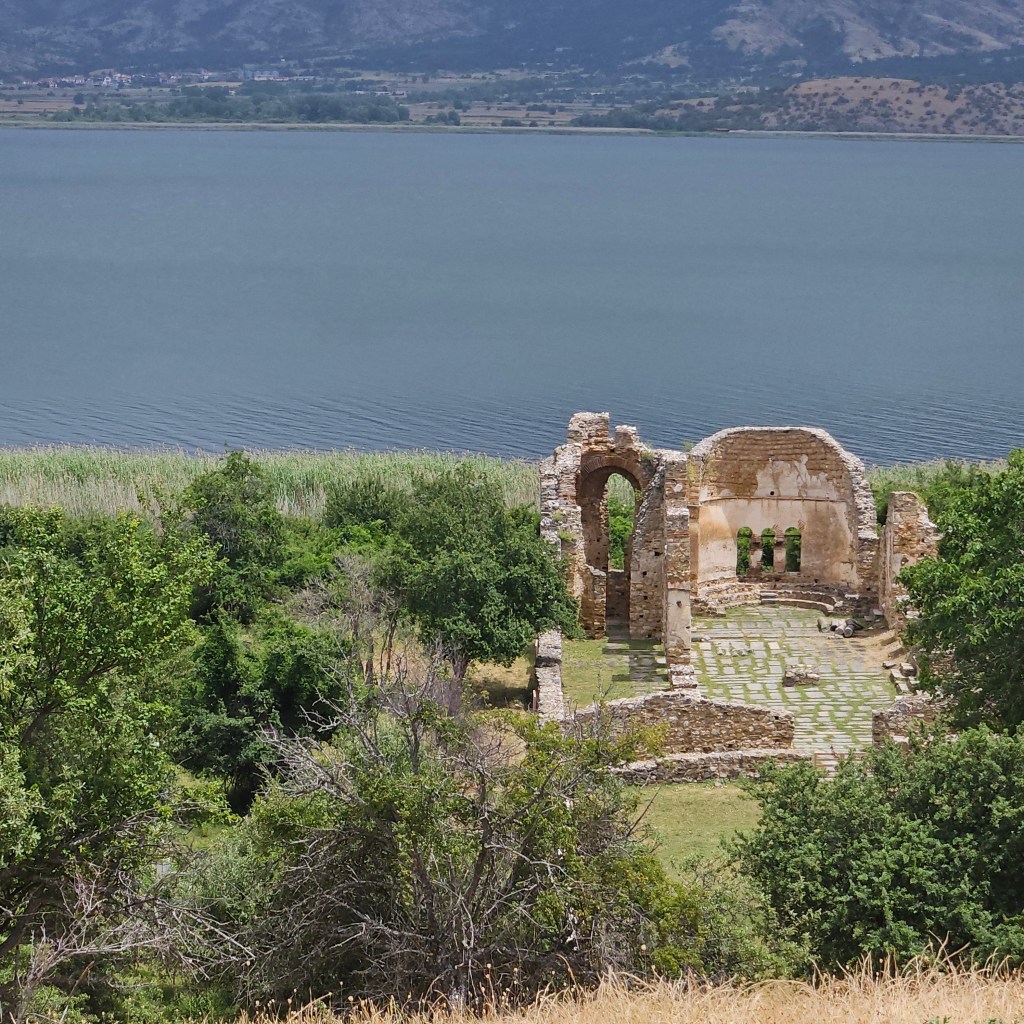
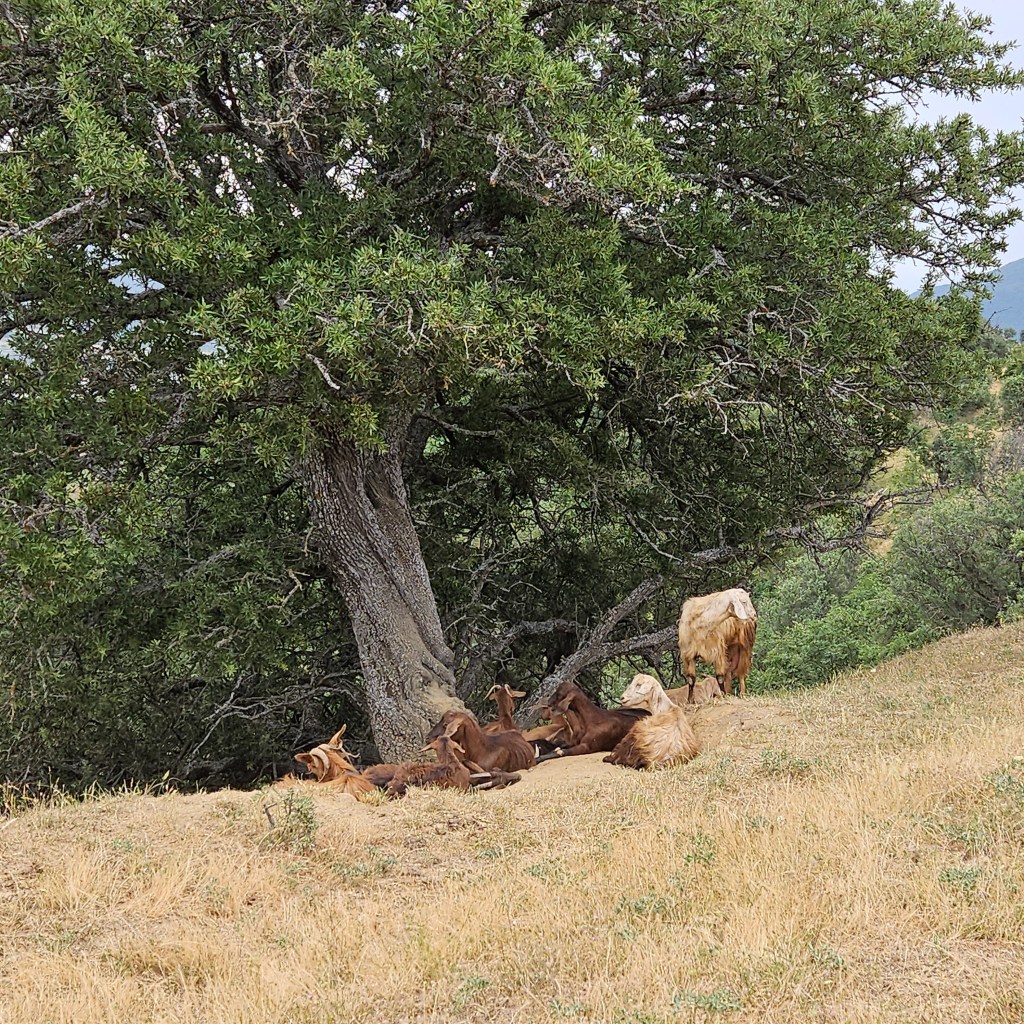
The main attraction of the island are the ruins of a10th century basilica and monastery, the oldest church in the area. Interesting that they choose to build on an island, but then again if the goal of the monks is quiet contemplation surrounded by nature, this makes sense. I decide to continue on and hike the length of the island. It seems severely overgrazed with cows and goats eliminating any understory among the olive trees.


In addition to farms, the park encompasses several villages totaling 1300 residents, the most picturesque of which is Agios Germanos, population 130. Five kilometers above the lake and nestled between two mountains, the Agios Germanos river runs through the middle of town. While it’s hard to say how old the town is, the local Byzantine church dates back to the early 11th century. With its water powered flour mill, and houses of thick stone walls, dark wooden balconies, and red tiled roofs, the village seems prototypical medieval, or even a setting from Game of Thrones. Although, they convey their traditional character, most of the buildings are less than 200 years old and seem to be in various states of either collapse or restoration.
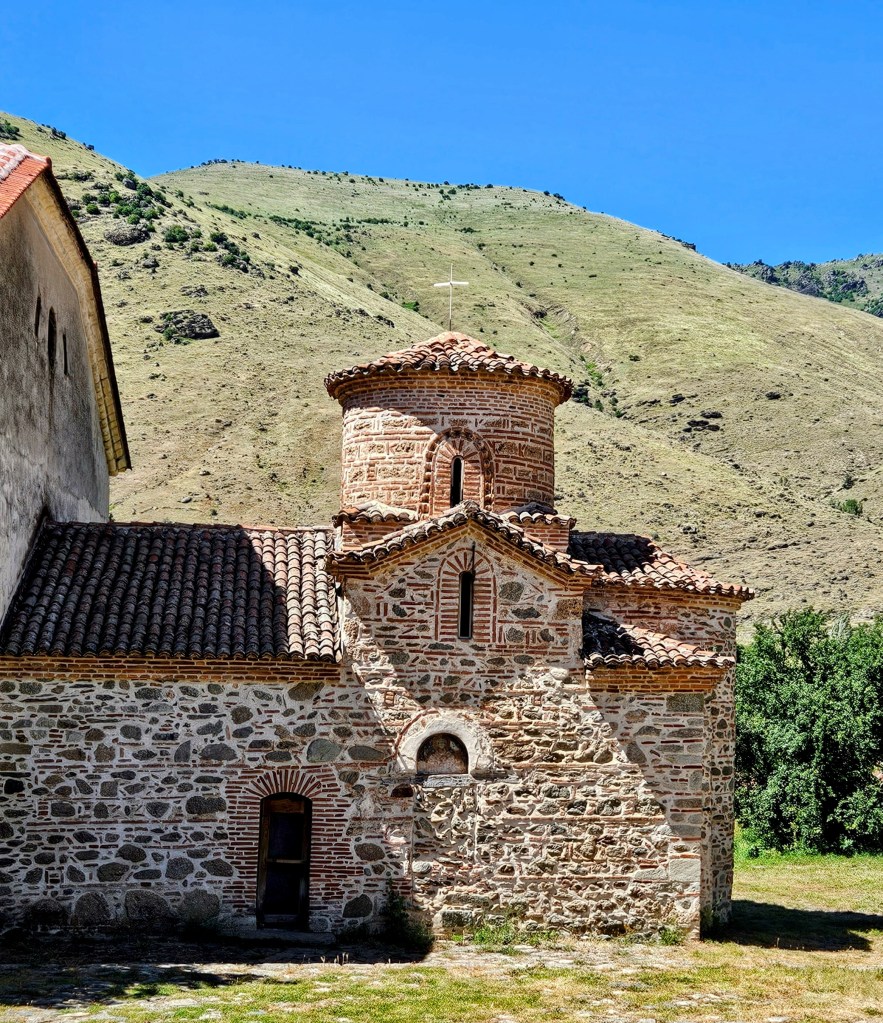


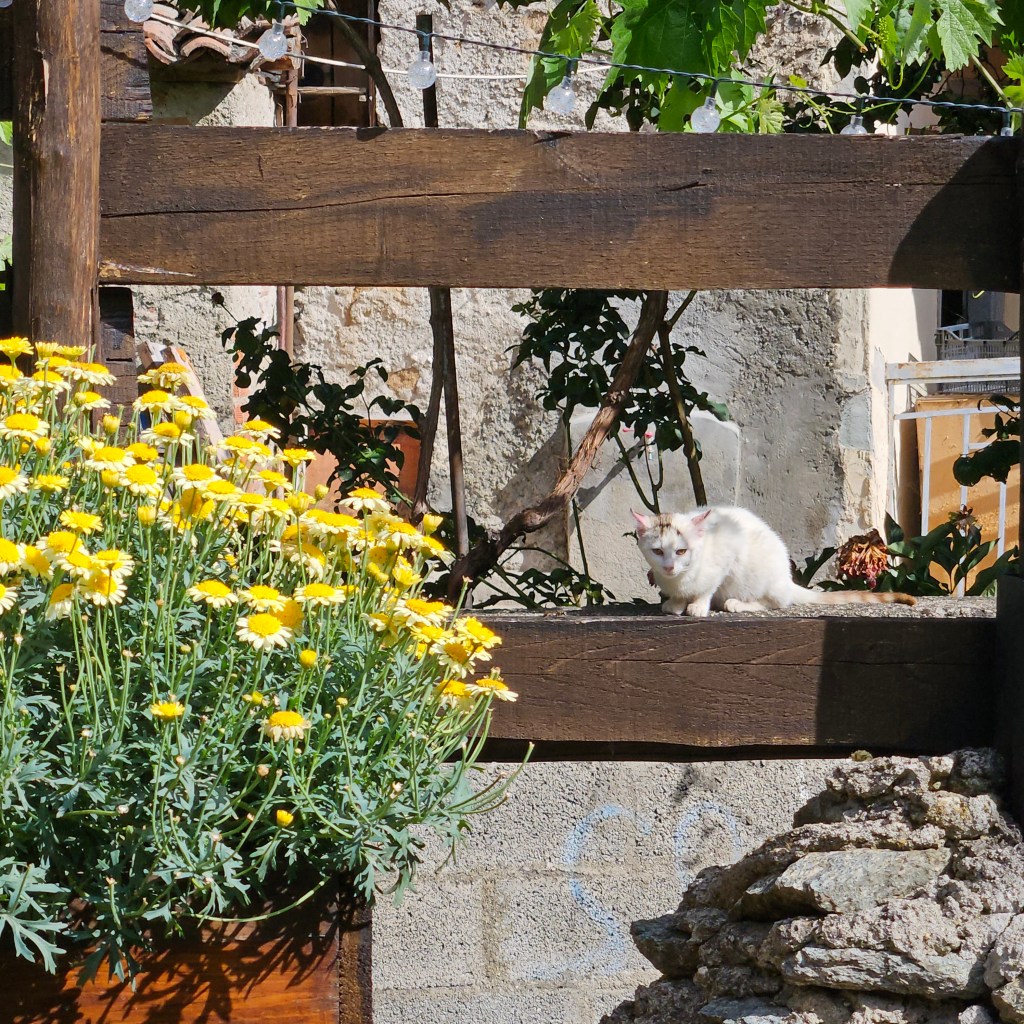

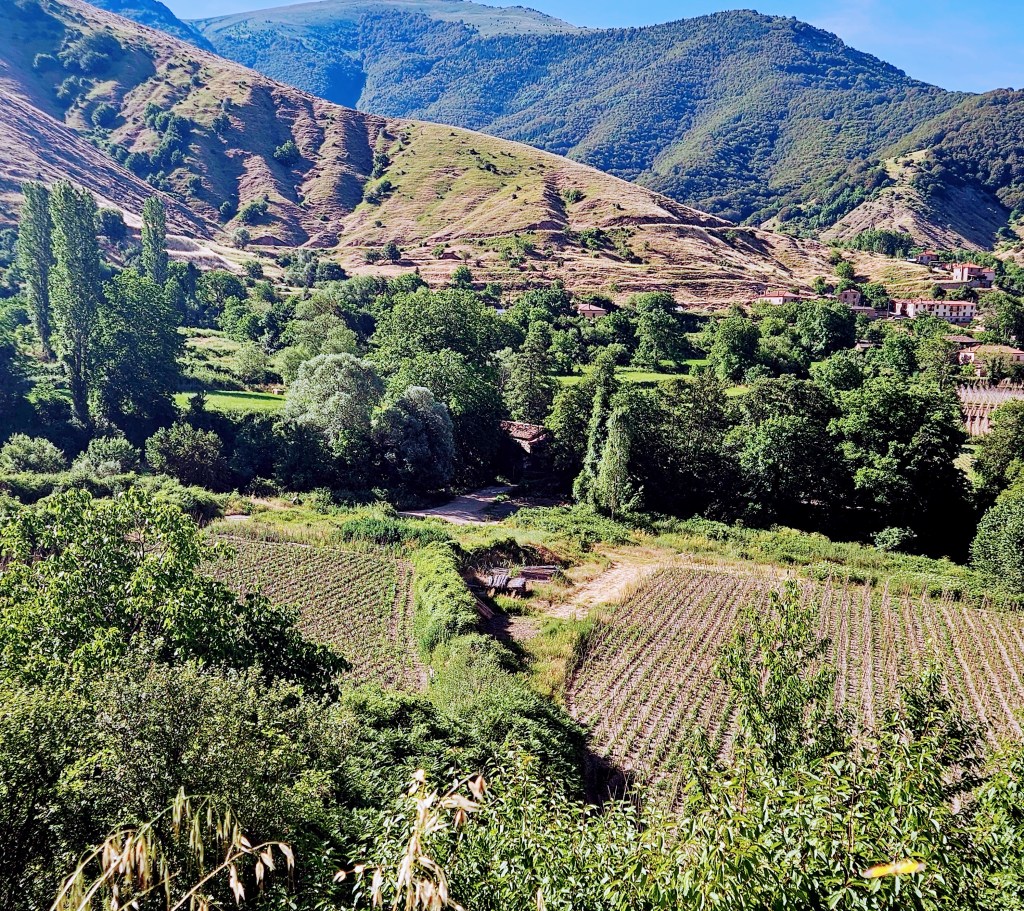


Regardless, the area has a long history of human occupation, with its zenith arguably in the early 20th century when the population reached 13,000, tenfold its current level. Then came the Greek Civil War (1946-49) and as the region was a leftist stronghold, most were either killed or fled to Albania, and the population dropped to just a few hundred. The government relocated Vlach shepherds from central Greece ( who speak a dialect of Latin). So as old as this place seems, most people are recent transplants since the mid twentieth century.
One of those recent arrivals is Julian Hoffman, an English writer, who with his wife, Julia, moved to Agios Germanos sight unseen in 2000 and has lived here ever since. (For more on Julian see https://julian-hoffman.com/)
Introduced by a mutual friend, Julian agreed to show me around the area and we’d agreed to meet at 10am. But first we had to have coffee at one of two cafes in town, so that took a while—the pace of life here is rather unhurried. From Agios Germanos, we descended toward the isthmus separating lesser and greater Lake Prespa. From the other side of the lake we drove to the top of the ridge with expansive views of o the north. Across Greater Lake Prespa lay the villages of north Macedonia and to the northwest are the high mountains of Albania. All three countries share the lake as a transboundary national park, the first in Europe. And although the villages in Macedonia are only 20 minute walk, the border crossing is a 2 hour drive, since neither Macedonia nor Albania are in the EU.
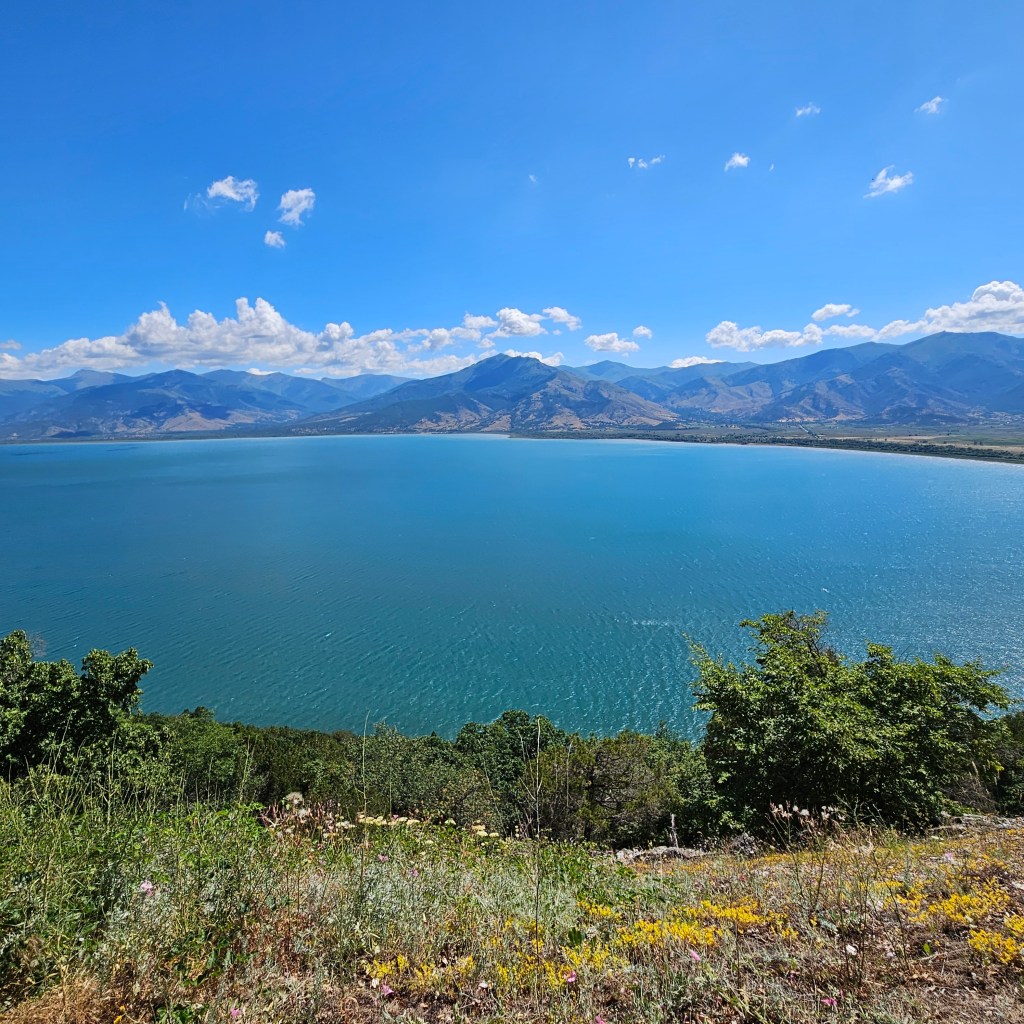
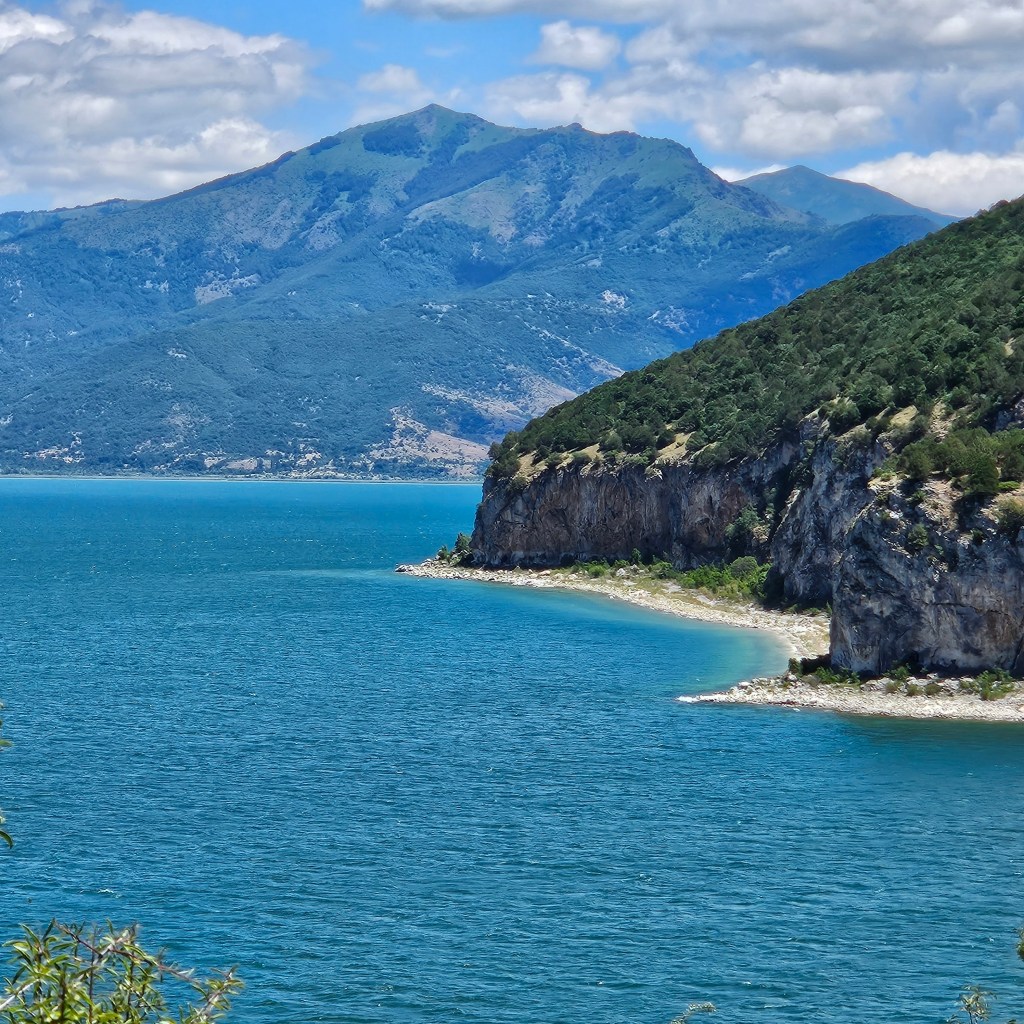
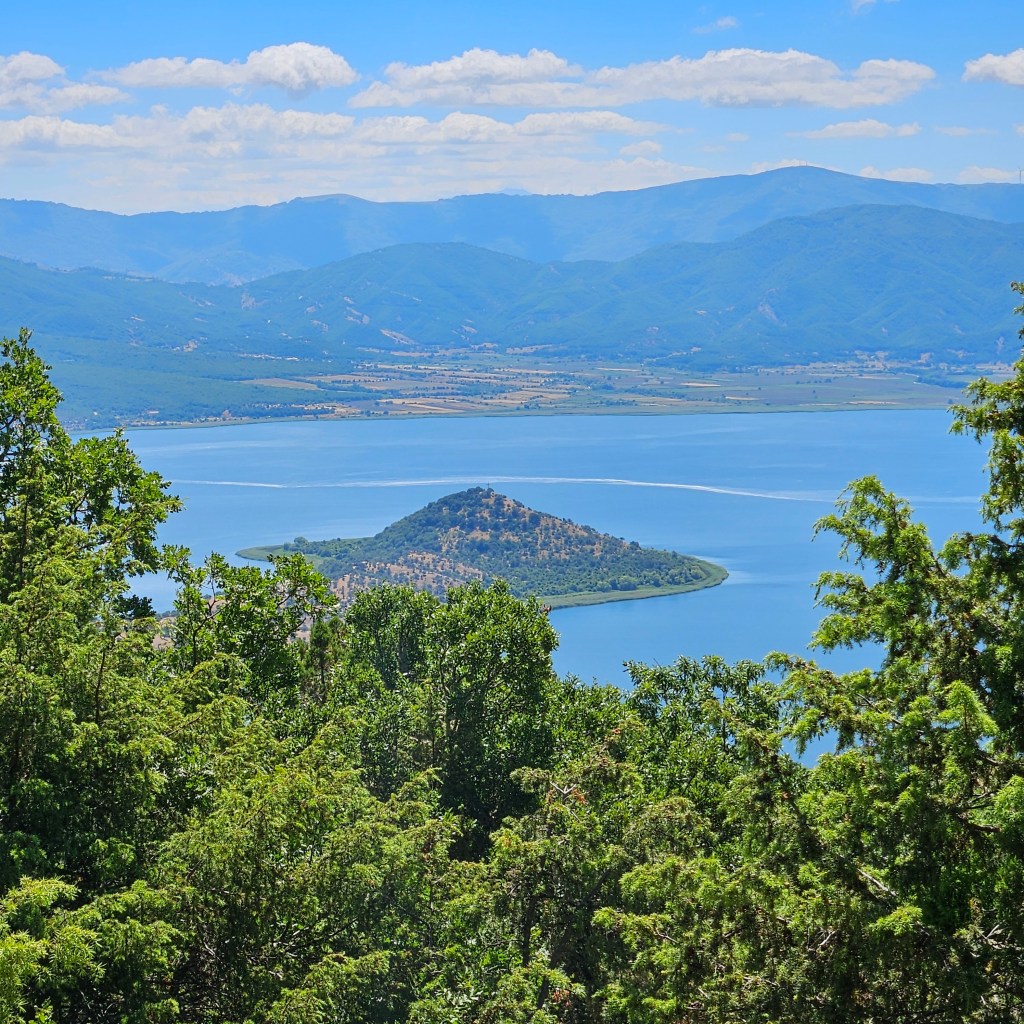
Julian pulls over at the top of the ridge opposite a small chapel, and we walk up to the sacred grove of Greek juniper, that Julian says are 500 years old, although we both agree they look much older. The trees aren’t particularly tall, maybe 50 to 80 feet, but with thick twisting trunks that suggest hardship and antiquity. Many of the lower branches have been coppiced, which seems odd if they are sacred, on the other hand this ancient practice keeps the trees alive, while still providing firewood. Crude wooden benches are lined up in the grove, suggesting outdoor services. The grove around the church is only a few acres, beyond which the old juniper give way to smaller oak and much younger junipers.
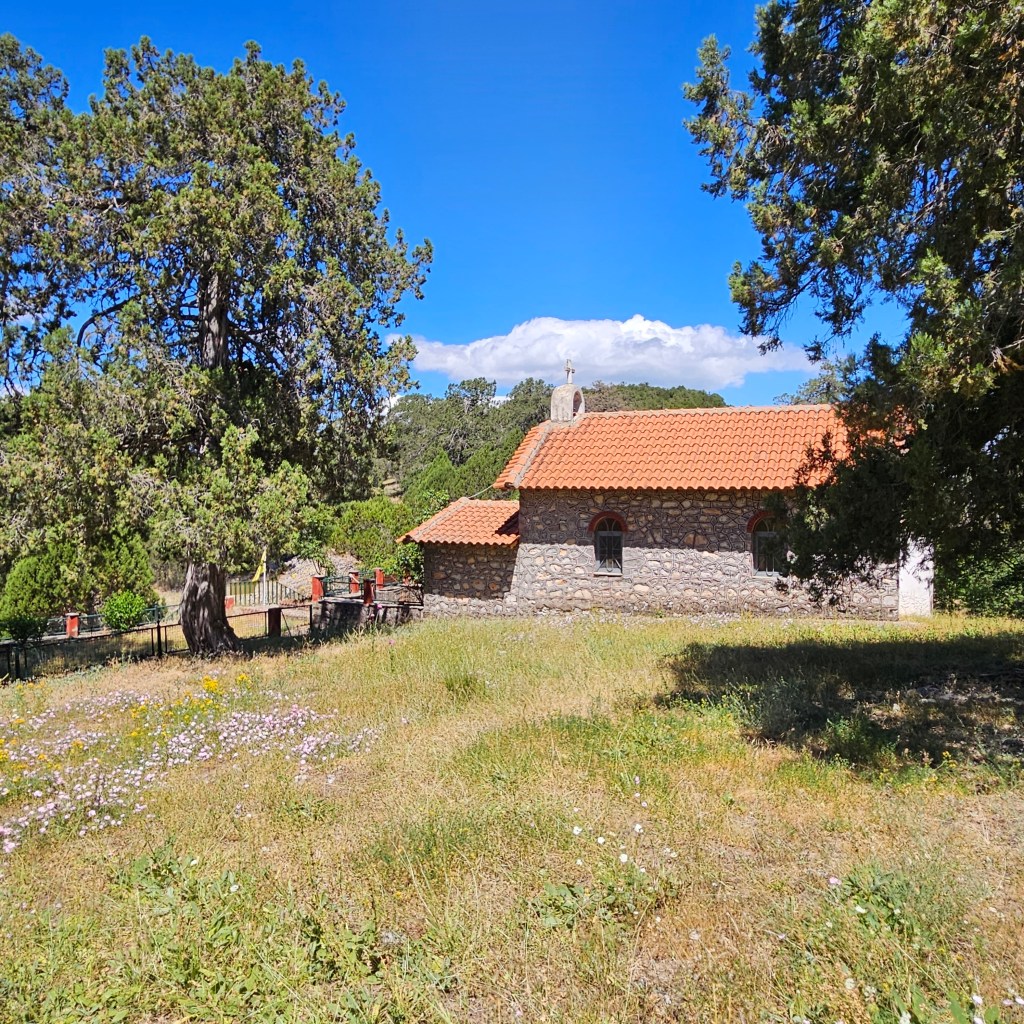

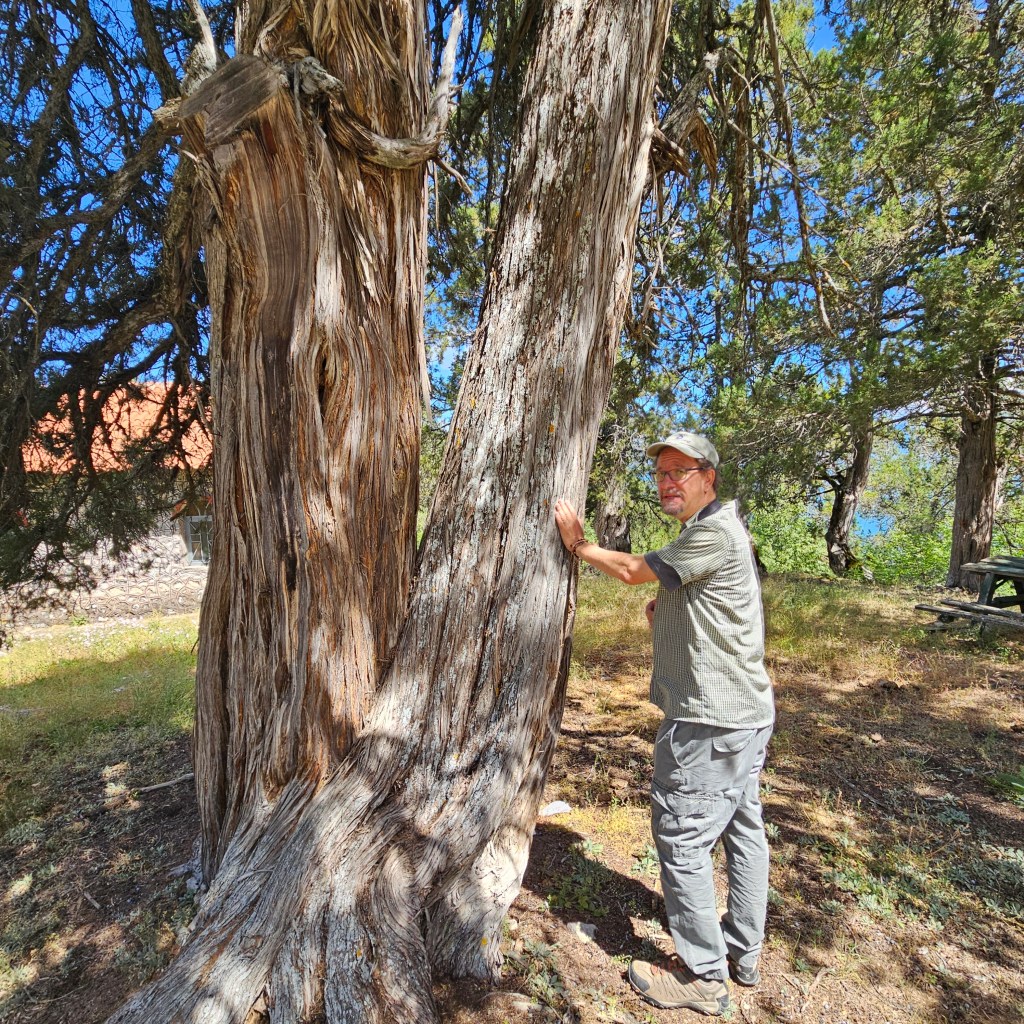

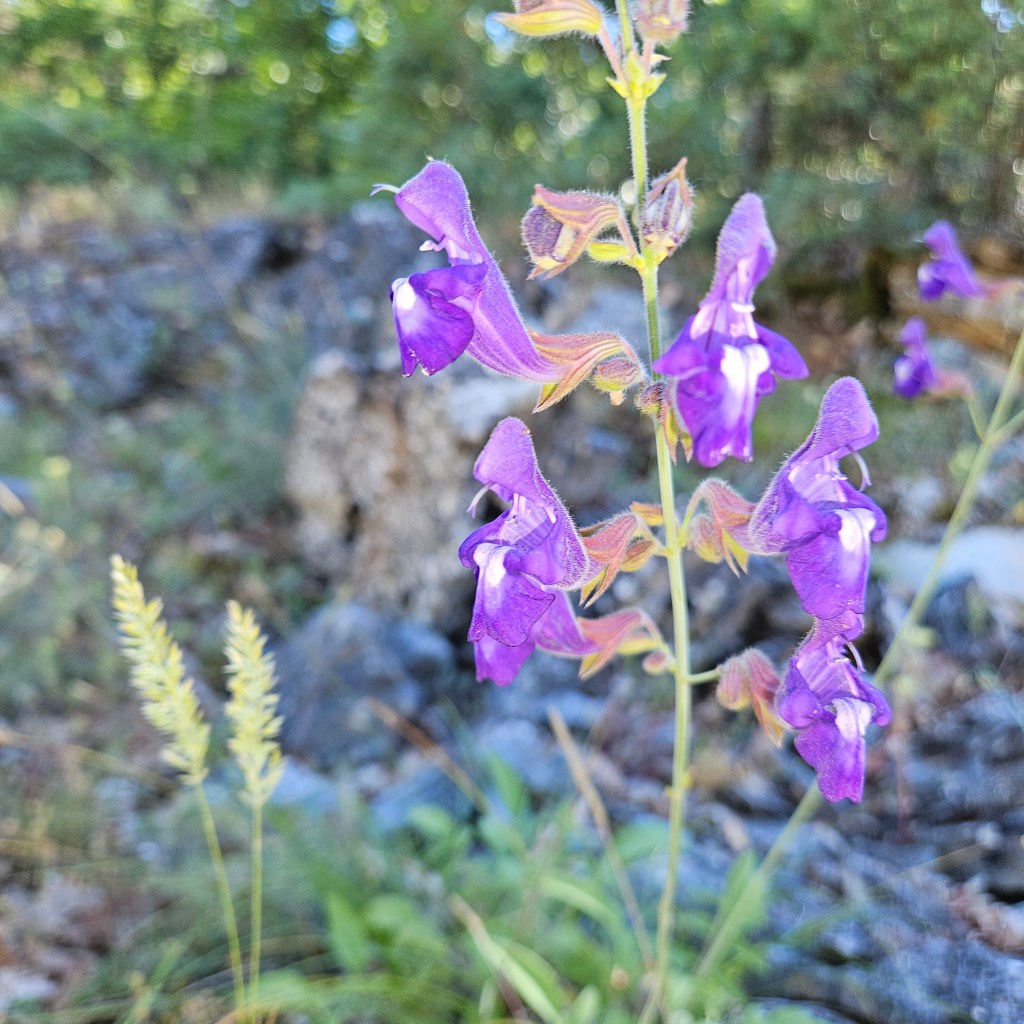

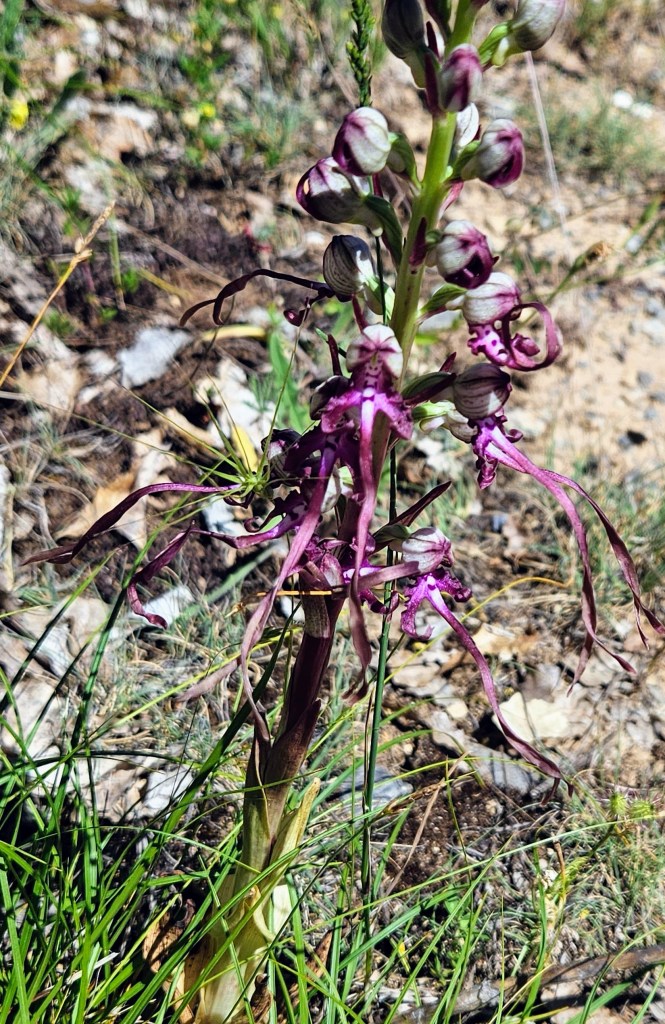

Curious about the connection between nature and religion, I wondered if the church was built here because it was a sacred grove or did it become sacred because of the church? Either way the trees around the church have remained standing while most of the area beyond is second (or third, (in Greece who can say?) growth. The tall junipers provide a mix of sunlight and shade allowing for a diversity of forms, some 600 plant species according to Julian, many rare and endemic orchids, fostering the designation of this site by the EU as area of special concern. But here’s the rub, with the demise of grazing by goats, the oaks have encroached and dominated the understory crowding out the forbs. In other words, traditional human use in the form of grazing kept the oaks at bay allowing for a highly biodiverse plant community and the maintenance of an ancient juniper grove.
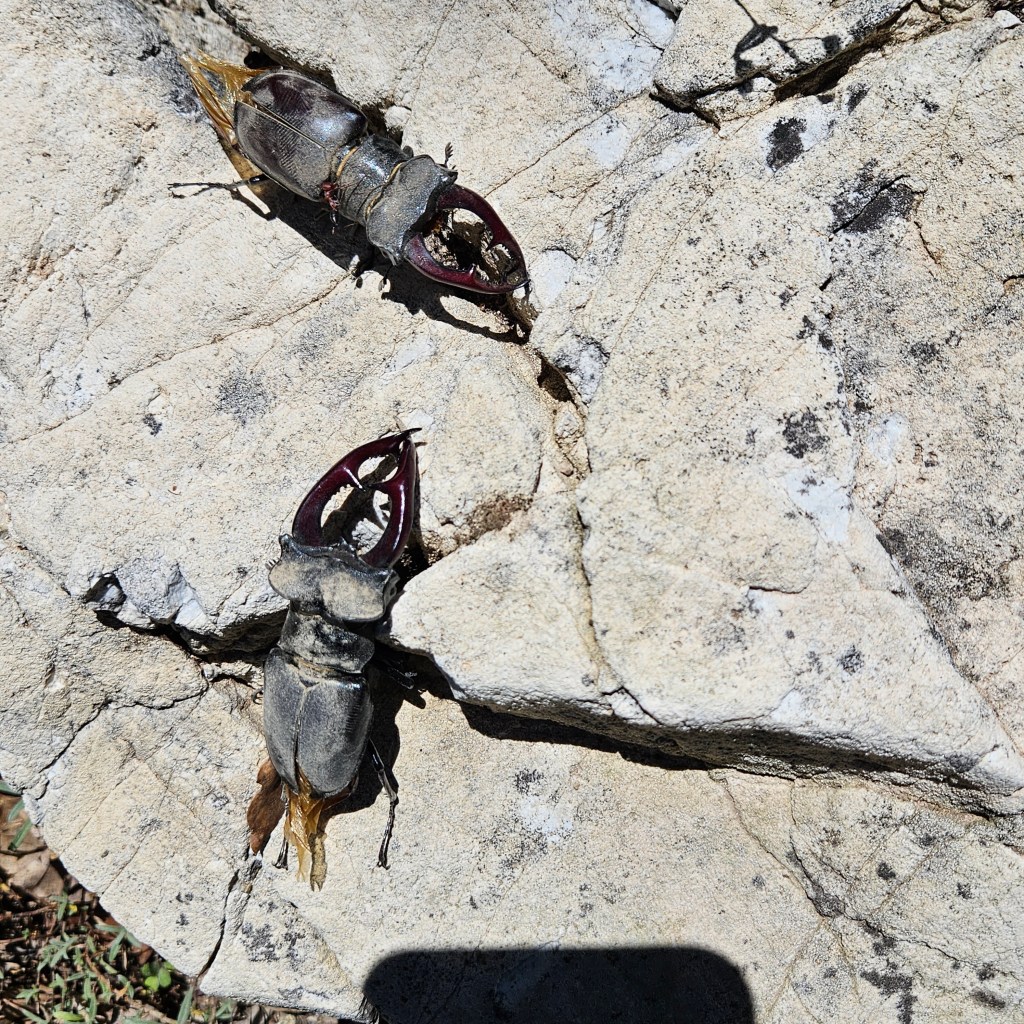
The next day I hiked to Mt Devos along a jeep track through the oak-juniper forest, and found a surprisingly number of plant species along the road, including several crazy looking orchid species, a pair of dead giant longhorn beetles, lots of lizards, a rock bunting, a pack of wild boars who ran off grunting and squealing, and a lot of brown bear sign, including upturned rocks and scratch marks on a power pole as high as I could reach. Julian mentioned that the wooden power pole behind his house had been nearly shredded to bits by bears.
I pass by a string of small horses with wooden packsaddles wandering through the forest. Clearly they are part of a logging operation, but a very selective process that seems to be mostly focused on fire wood. Despite the biodiversity, the years of logging and overgrazing have taken their toll. It seems a delicate balance to keep the various dynamics intact. Things constantly change. For example, with climate change the snow pack is decreasing, and as a result the lakes are receding. You can see the shoreline from 50 years ago and how the lakes continue to shrink with more wetlands fringing the water and then new forests frowning above. If this was a national park in the strict preservation sense, we’d just let that happen naturally. But with 6000 years of human occupation and a current population of 1300 living here, each action whether human or natural has a cascade of effects.
If the lake recedes will the wetlands increase or also dry up? How can the juniper groves be maintained without the goats grazing the oaks? How can you maintain the incredible biodiversity (1800 plant and 450 animal species) with livestock, humans, and climate change? Seeking some answers, I arranged a meeting with Myrsini Malakou, the director of the Society for the Protection of Prespa (SPP) an NGO that has been working in the area for 25 years. (For more on Myrsini and her work see https://www.goldmanprize.org/recipient/giorgos-catsadorakis-myrsini-malakou/).
Unlike the North American model of national parks, Prespa follows the European model where parks include human residents and human interaction with the landscape is apparent and even essential. Myrsini discussed the challenges of having a national park with 500 different landowners around the lake, most of whom were absentee owners who’d left the area and now rented out their land for farmers. When I asked about the ubiquitous reed canary grass, which is an invasive species in the US, she said that not only is it a native reed essential to the ecosystem, but it’s also an integral part of a long standing human tradition of harvesting the reeds. However this practice is dying out, to the detriment of the ecosystem. To counterbalance this, SPS is trying to encourage reed harvesting, albeit mechanical. In addition, the cattle mucking around the lake shore create an essential disturbance to the reed ecosystem, which raises the question of if cattle grazing maintains the wetlands what happens when people no longer raise cattle? Apparently the loss of traditional agricultural practices implies the Perspa ecosystem just as much as climate change.
For more on Prespa see:
 Rewilding Urban Rivers
Leave a comment