Zagoria
Well this place is certainly different. Zagoria is a vast mountainous region with extensive forests, scattered villages, bisected by deep canyons, and clear blue streams, one of which becomes the Aoos River, the longest undammed river in Europe. Zagoria derives from the Slavic meaning land between the mountains.
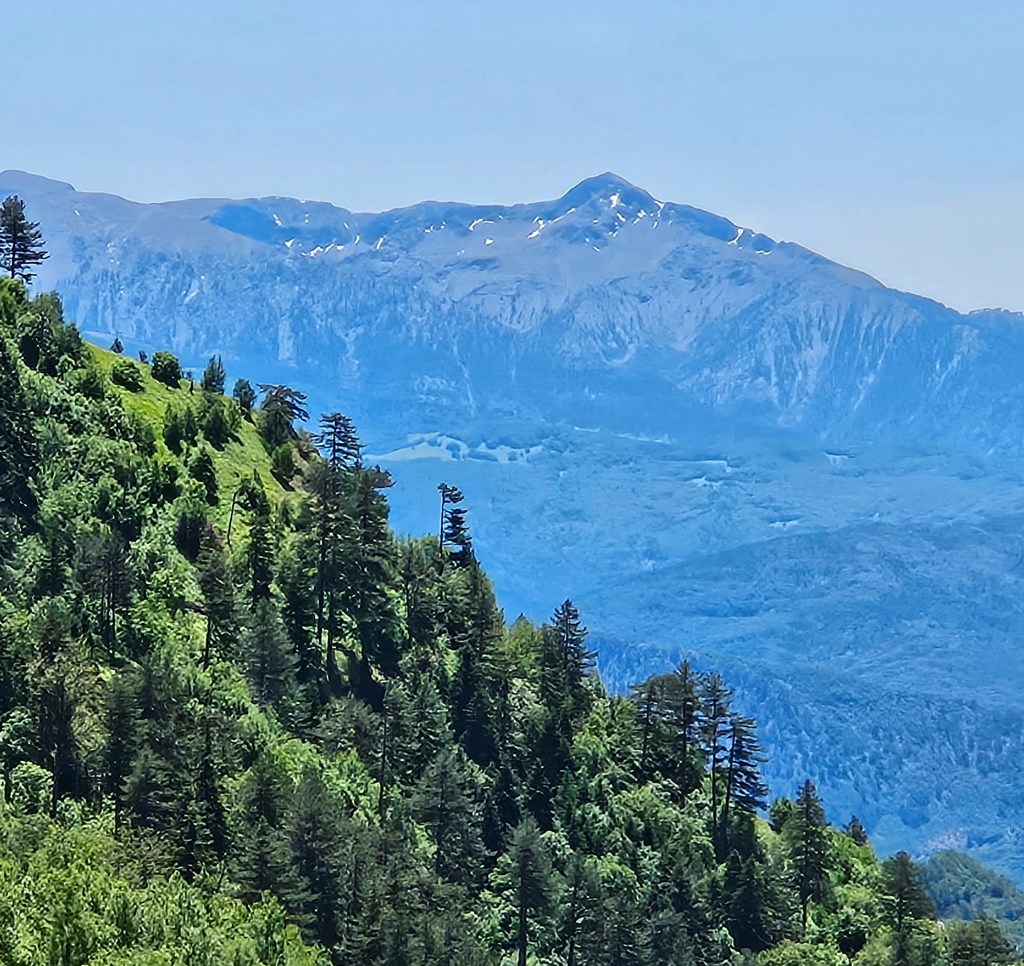

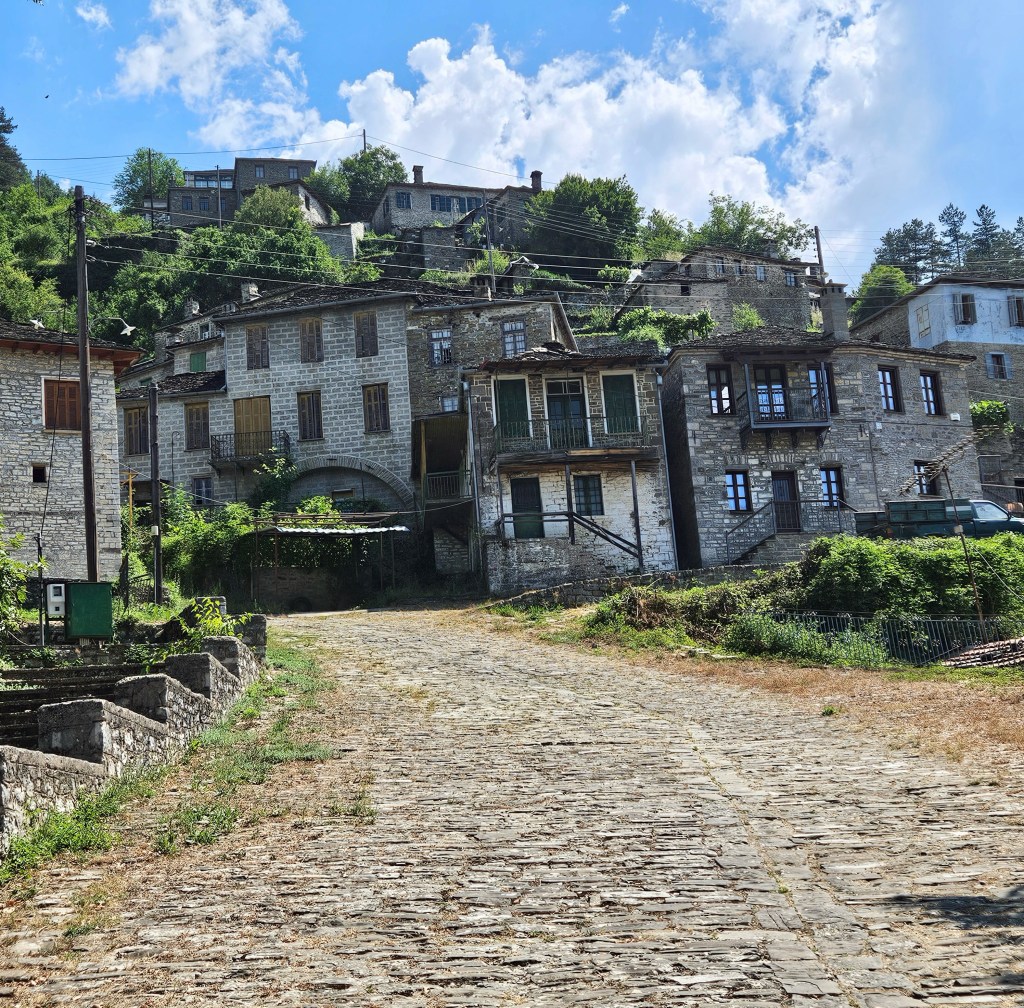
Aoos Vikos National Park encompasses nearly the entire region, with three core reserves that seem more typical of a national park, with vast expanses of forest, mountains, canyons, and sweeping vistas. There’s hiking trails, interpretive signs, and even rafting guides. The Zagorian villages, however, add a whole different dimension. And not entirely in a bad way, they certainly give the place character and are a welcome change from the crass commercialism of US parks.


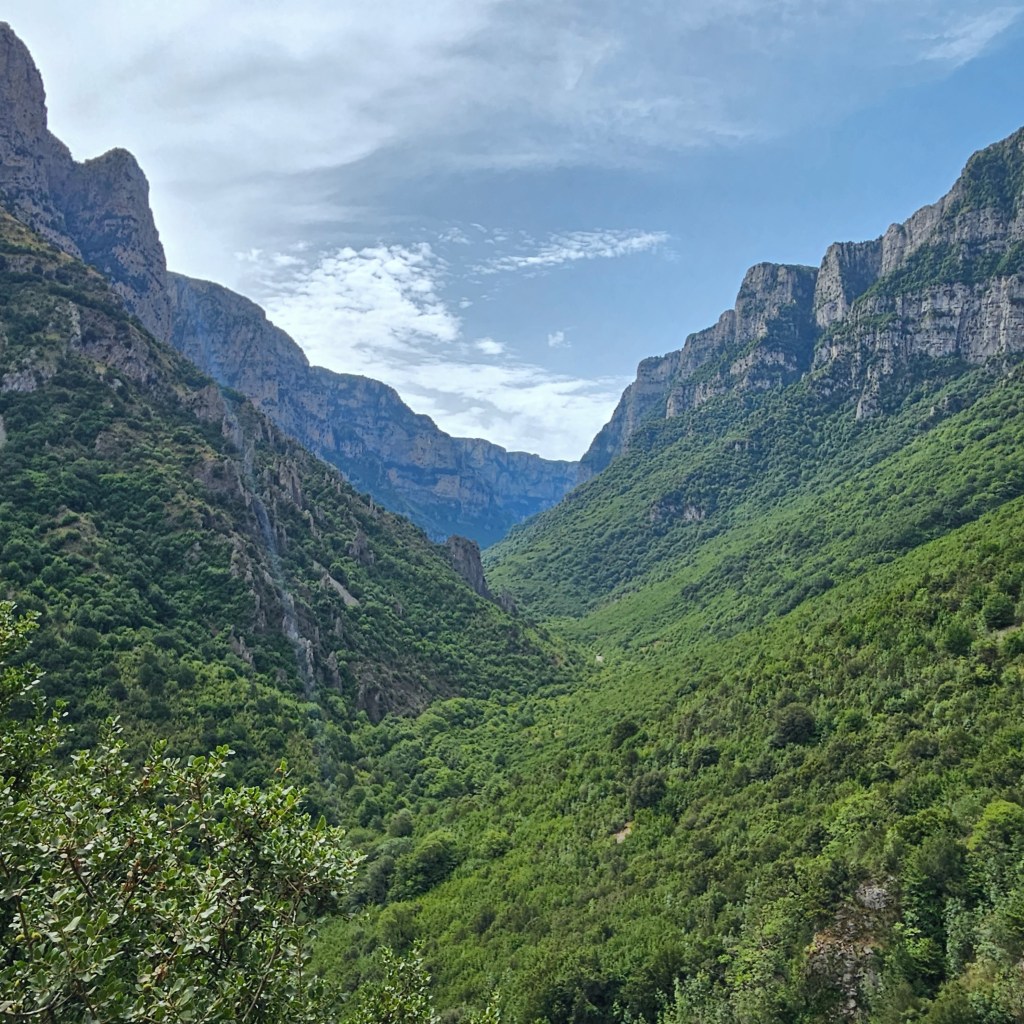
The primary attraction here is Vikos Gorge, which claims to be the deepest chasm on earth as a function of depth to width. And it’s certainly impressive although not terribly long. Most of it can be hiked in a single long day. The typical route is from Monodendri, the village where I’m staying, which seems to be the main base in this part of Zagoria, with several hotels, restaurants, and even an ATM, the first I’ve seen since Athens. The hotel manager, who also runs the main taxi service, suggested I start in Vikos, which is where most people end their hike as it’s mostly downhill from Monoderdri. And while the reverse is mostly uphill, especially the grueling climb out of the canyon, the views are better and it’s easier on the knees. Not sure how he knew, maybe it’s the white hair and knee brace? Regardless it was probably the best advice. The taxi dropped me at Vikos under a light sprinkle which while a welcome relief from the heat made the stone path rather slippery, and of course there’s a path paved with stones as it switchbacks 800 feet down to an old monastery, Theorokos, built 1773, sitting in an idyllic setting, nestled at the bottom of the canyon and next to an impossibly blue river that burbles out of a spring a few km upstream. Here the canyon goes from bone dry to a full blown river. Apparently all the water working its way through the limestone hits an impermeable layer and comes rushing out. And cold!

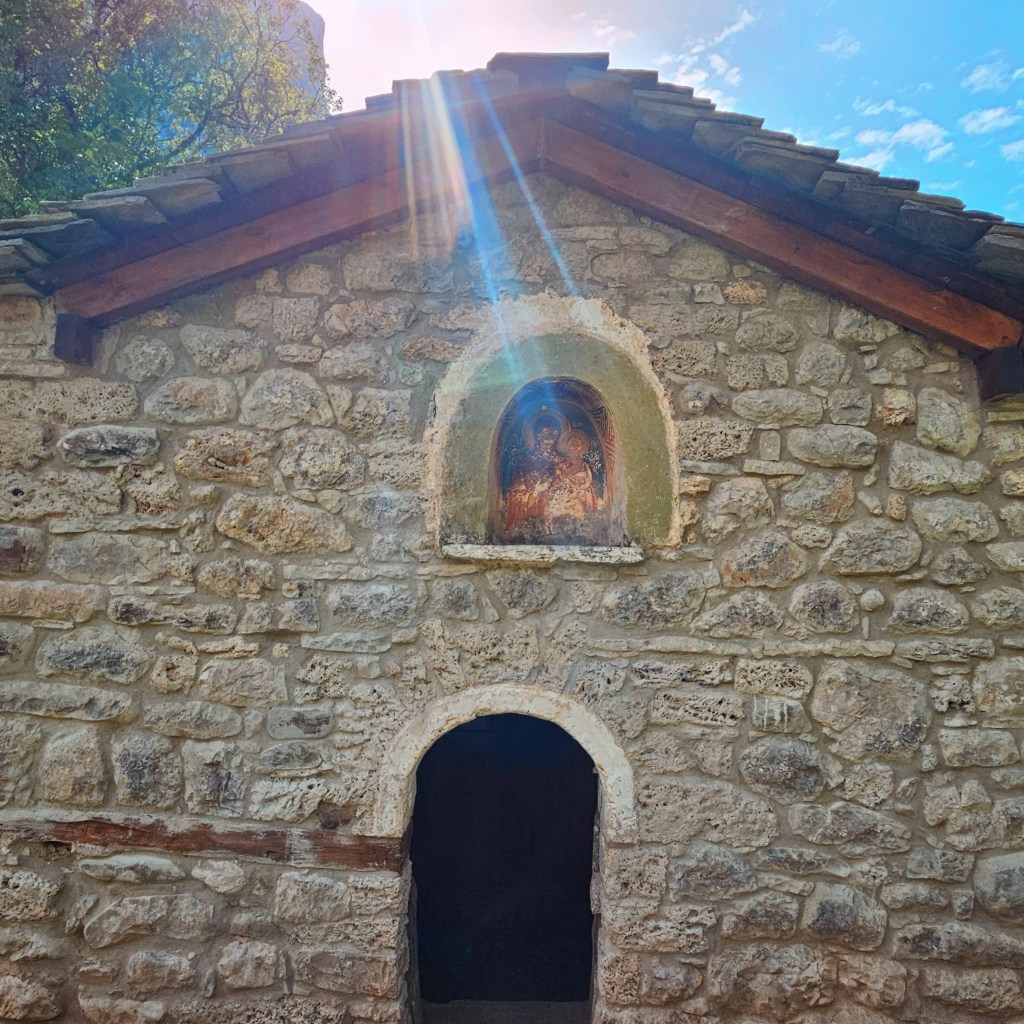


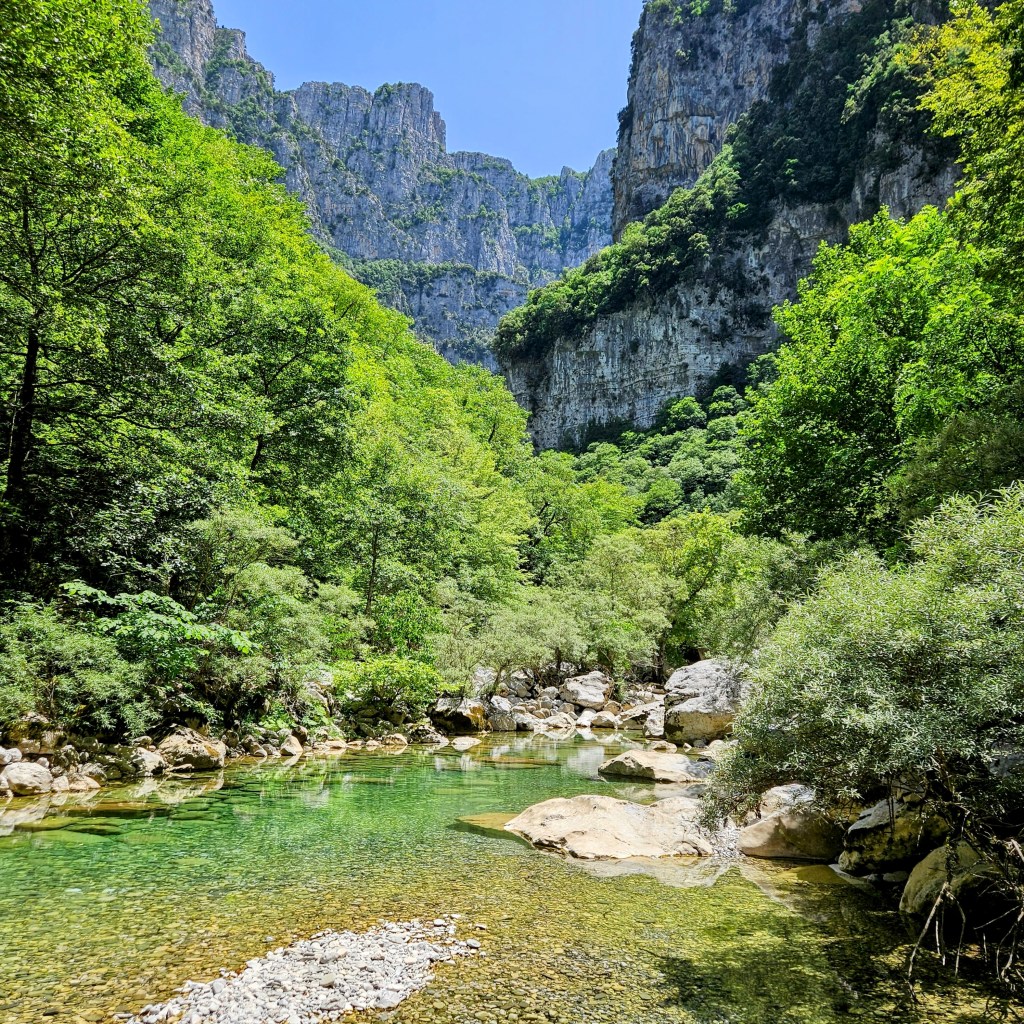
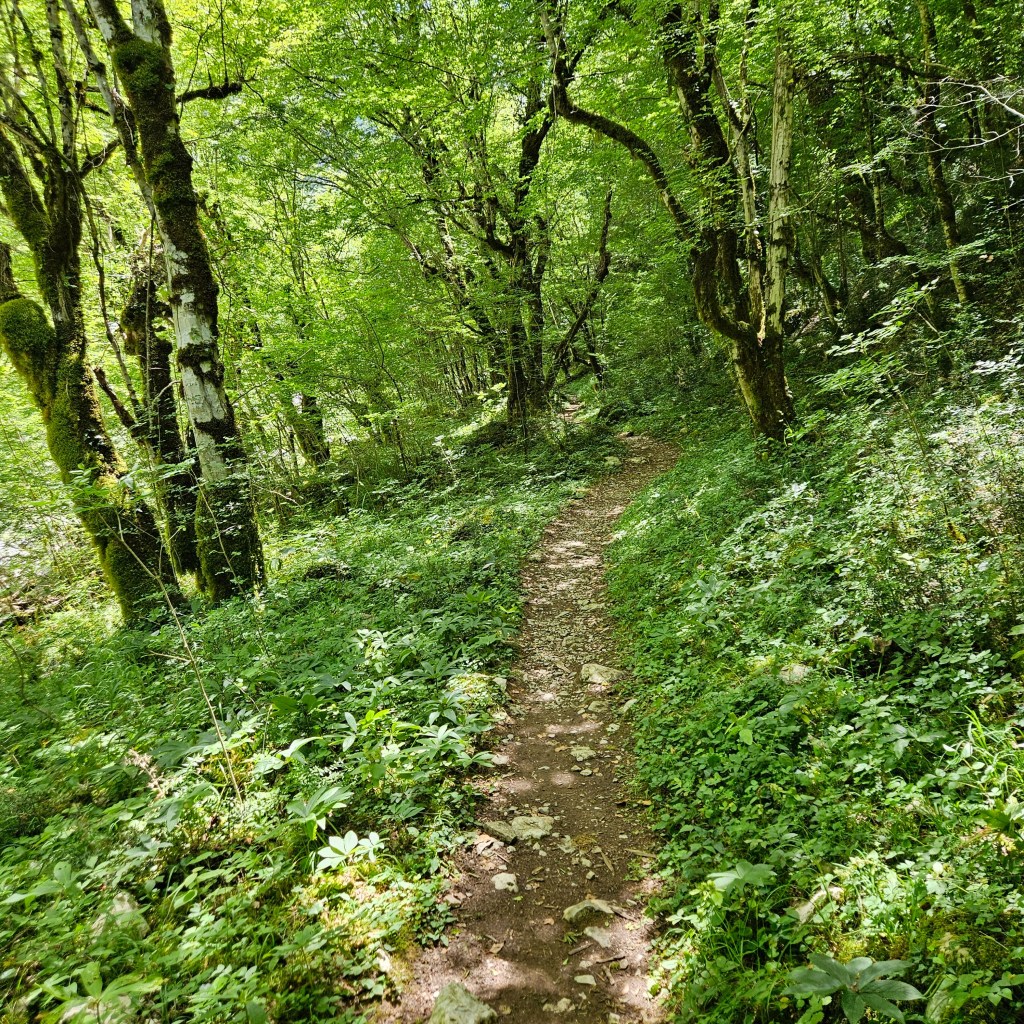
I linger far to long by the water and it’s 11am by the time I really start hiking, stopping to take way too many pictures of the sheer grey cliffs with splotches of orange. The views are indeed spectacular as you wind in and out of the beech forest. Before long I start crossing paths with multiple groups of hikers all coming the other way and as I continue to gain elevation and encounter rough sections I begin to question my guy’s advice, maybe he just wanted to get the first taxi run out of the way.

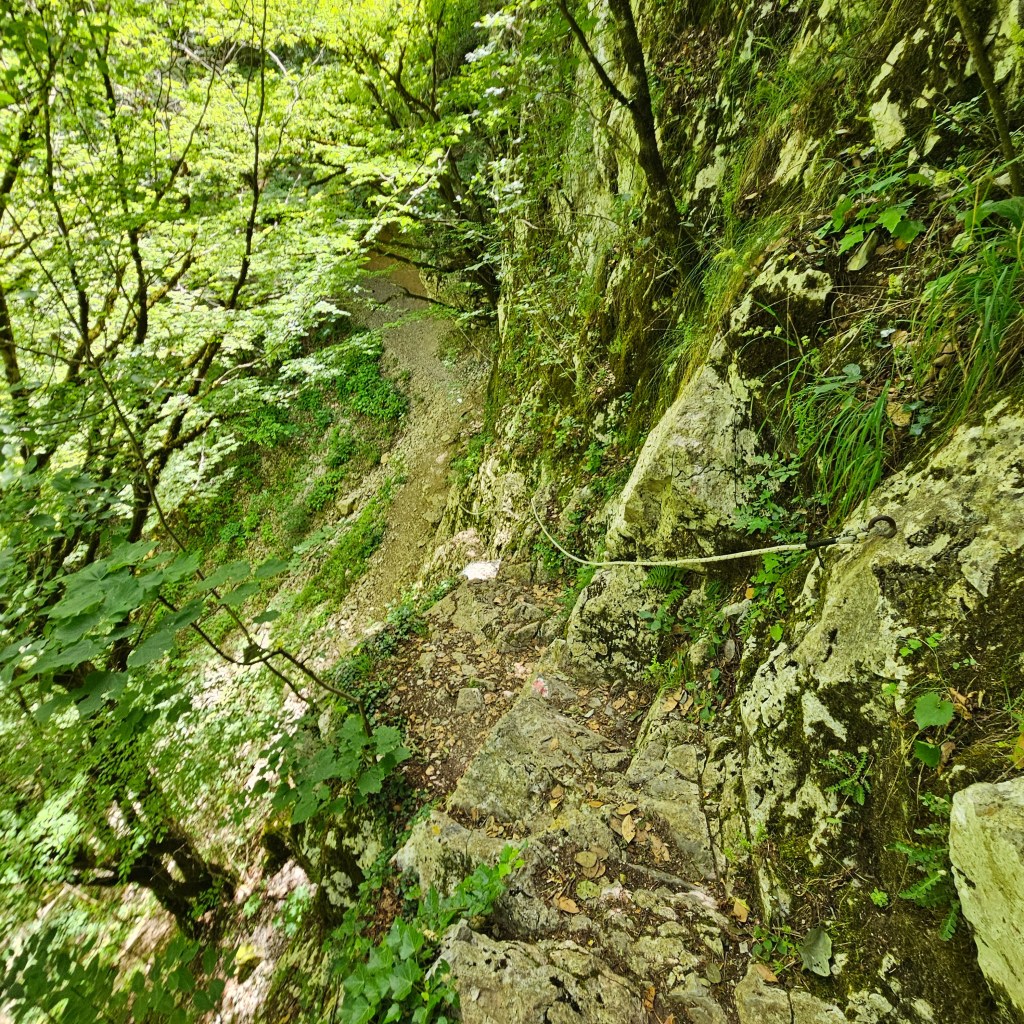




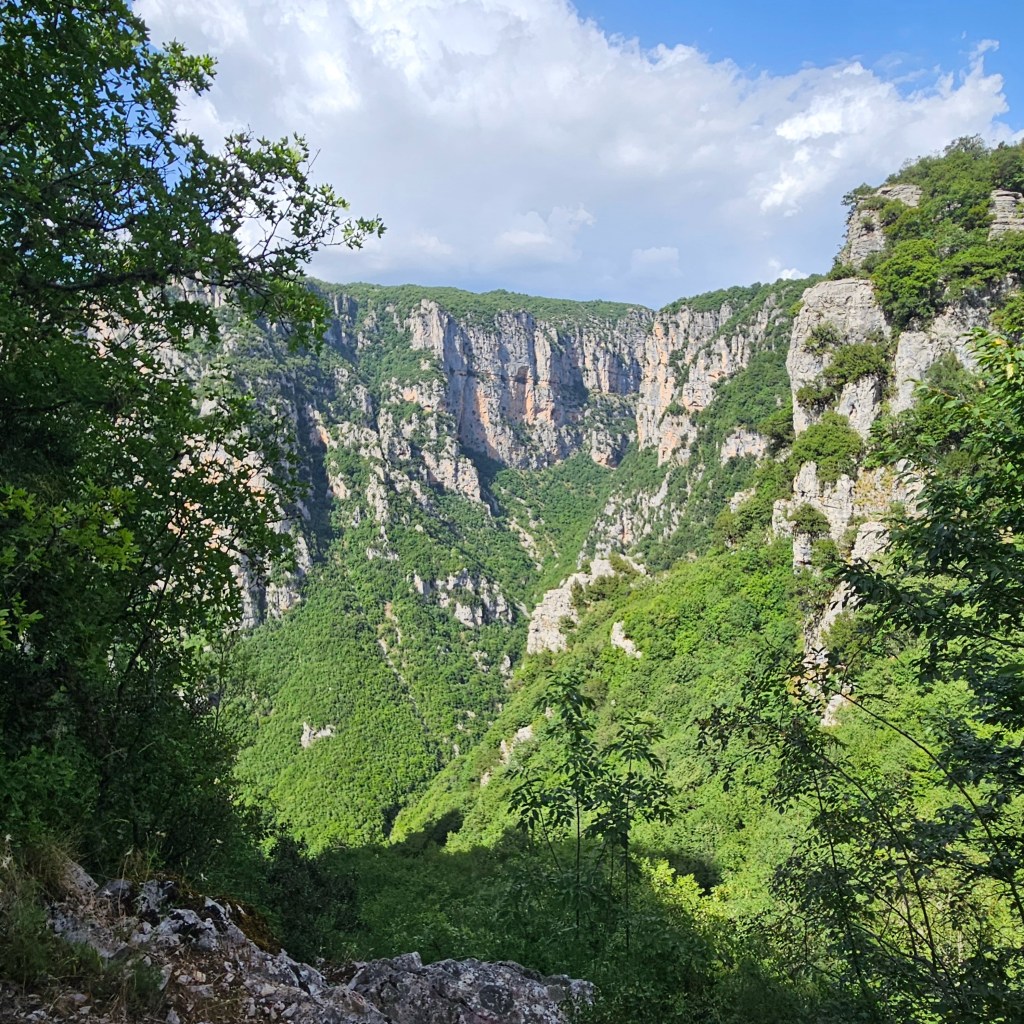
After the final push up 2500’ in the late afternoon heat, I was certainly second guessing his recommendation, but I knew that the hike would end right at the town square where the was a cold beer and food waiting.


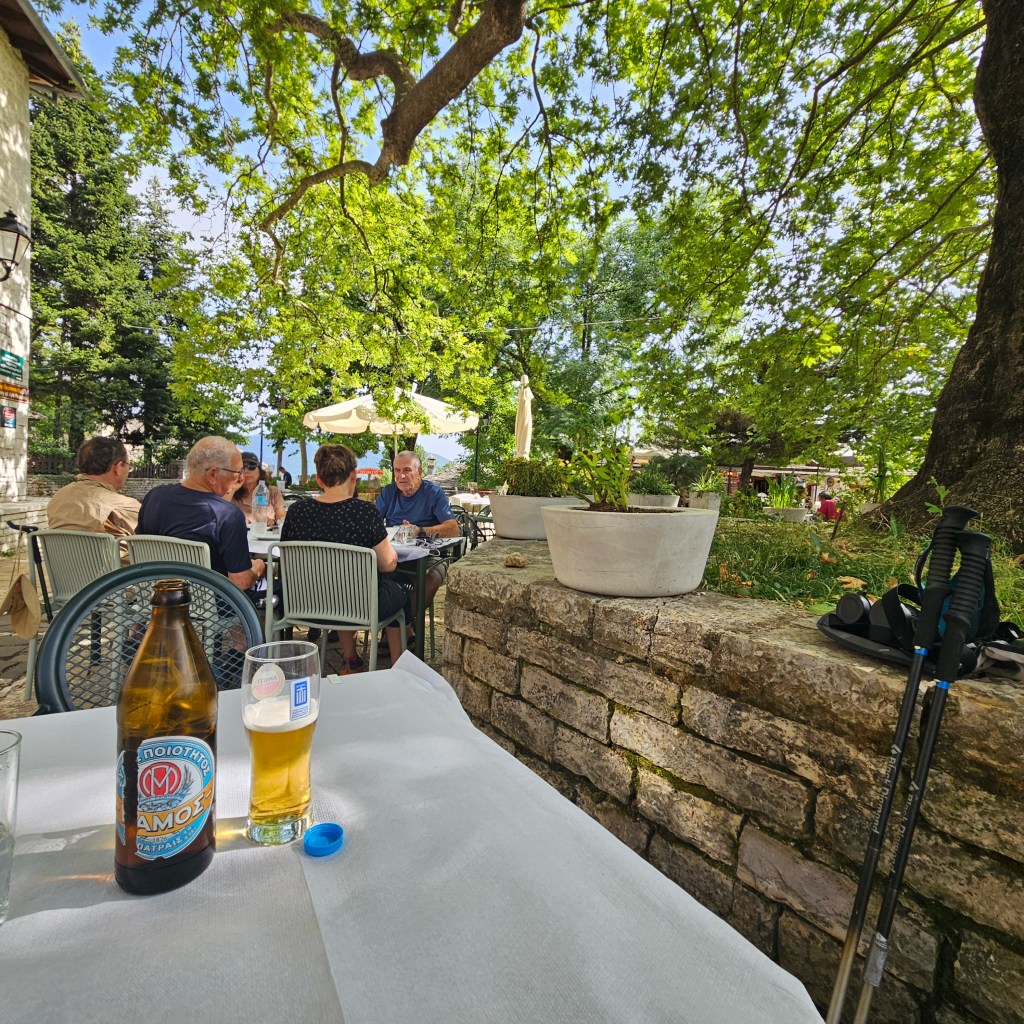
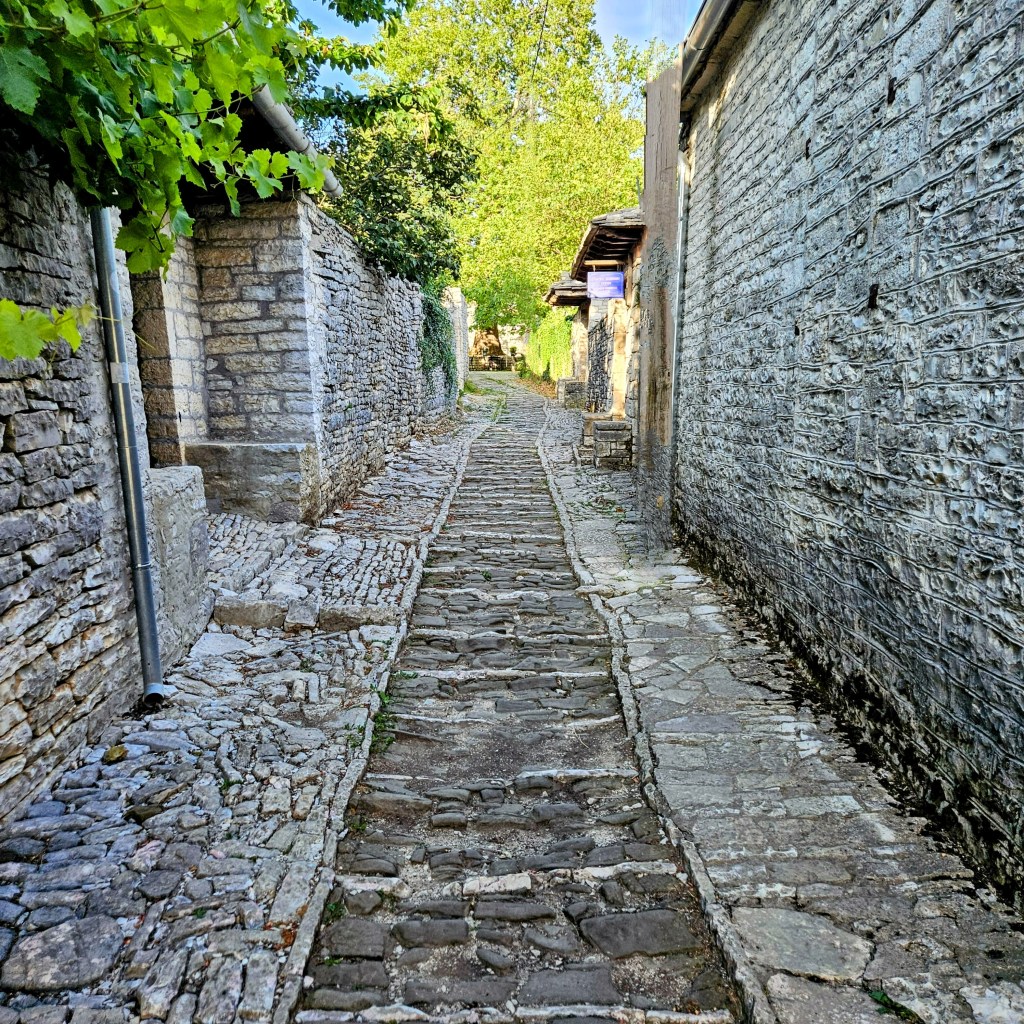
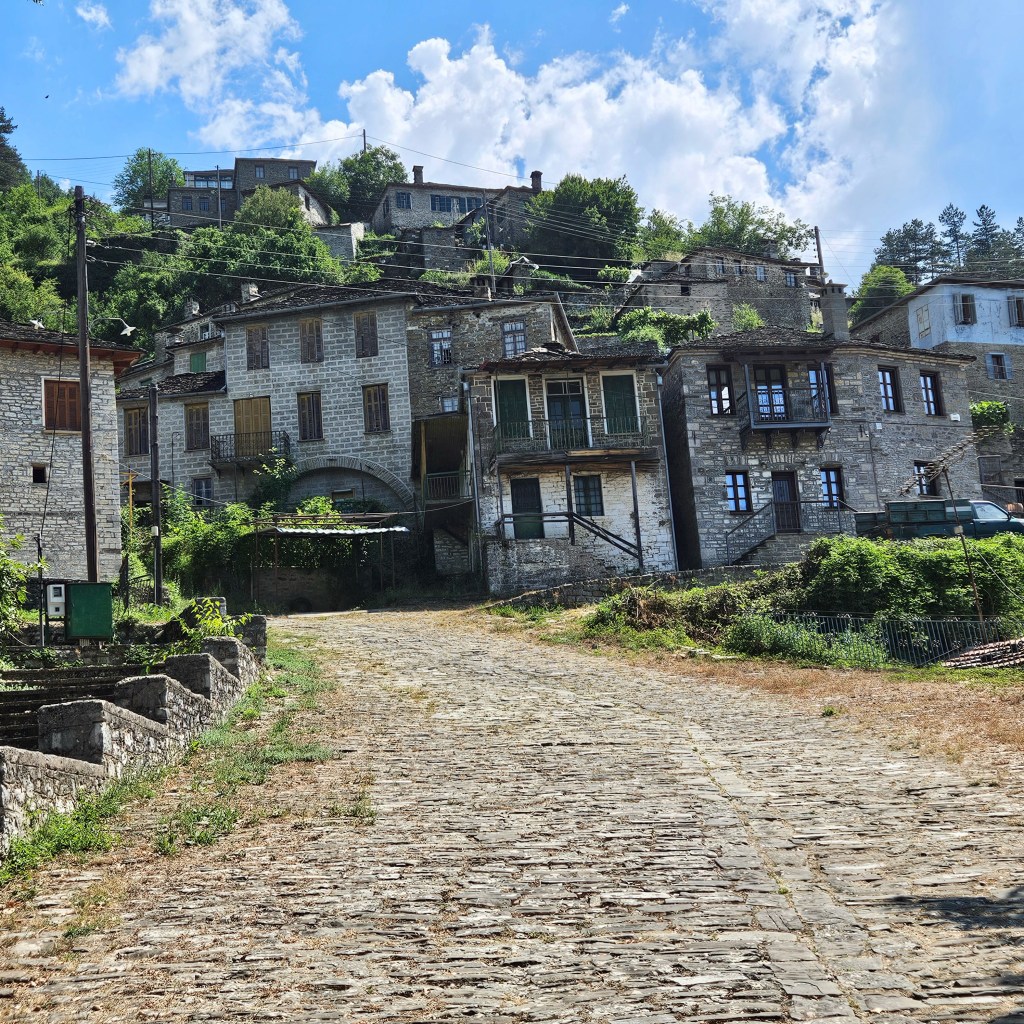
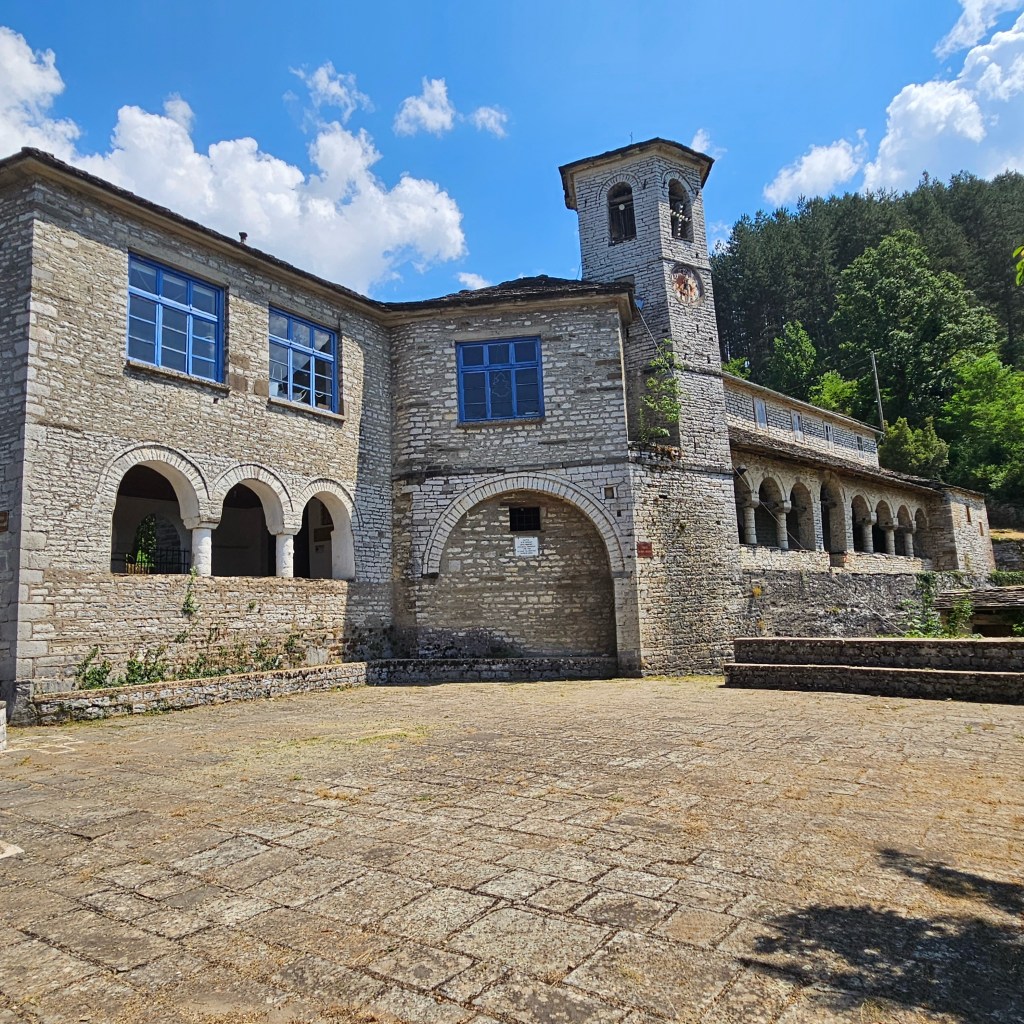
Since these villages in Zagoria were build long before cars and given their multiple levels being perched on the mountain sides, the town square isn’t accessible by car, just narrow cobblestones lanes that radiate out in seemingly random directions. In the case of Monodendri, the plaza circles around a giant plane or elm tree and a number of restaurants and cafes form the first circle then the church, a few hotels, the school, then houses as the village radiates out and up and down, as nothing is horizontal around here. The villages are primarily oriented to the southeast as winter is the most challenging time of year, or at least used to be back when there was snow.


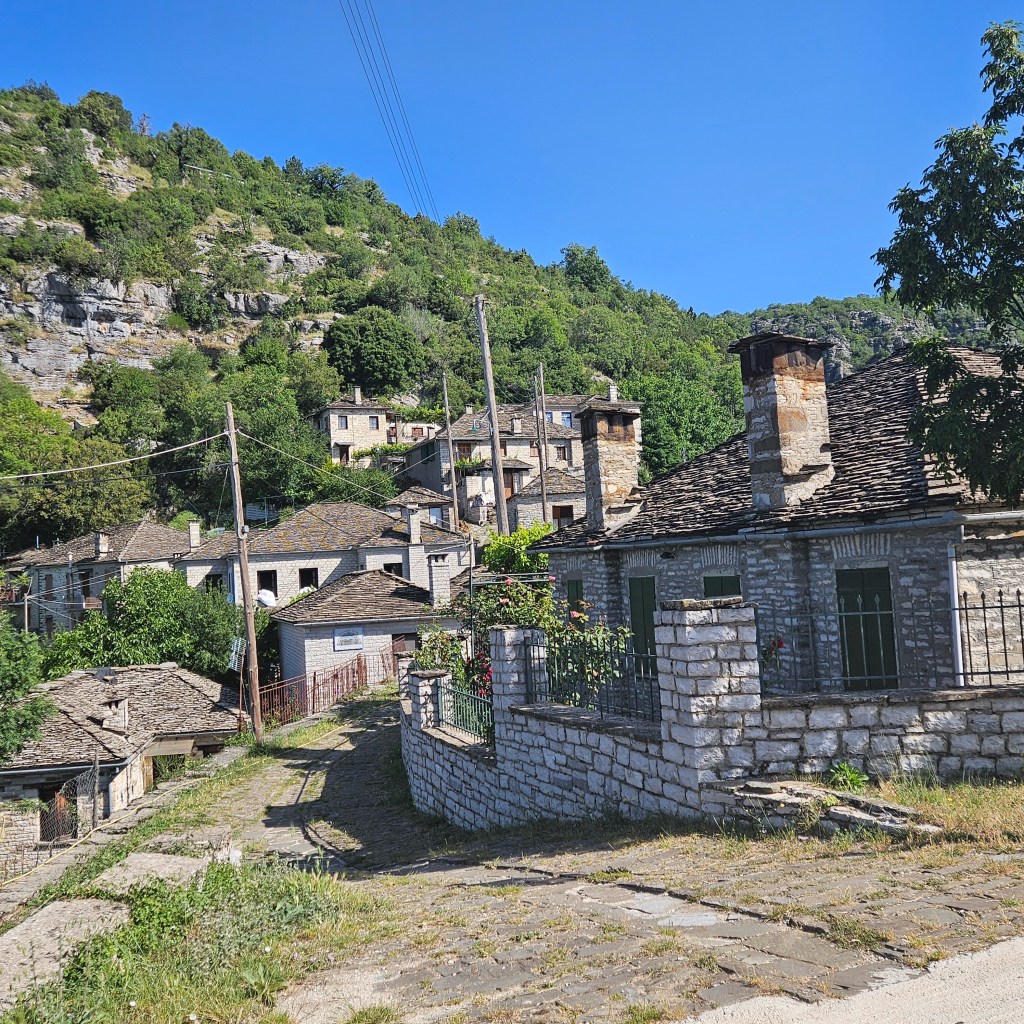
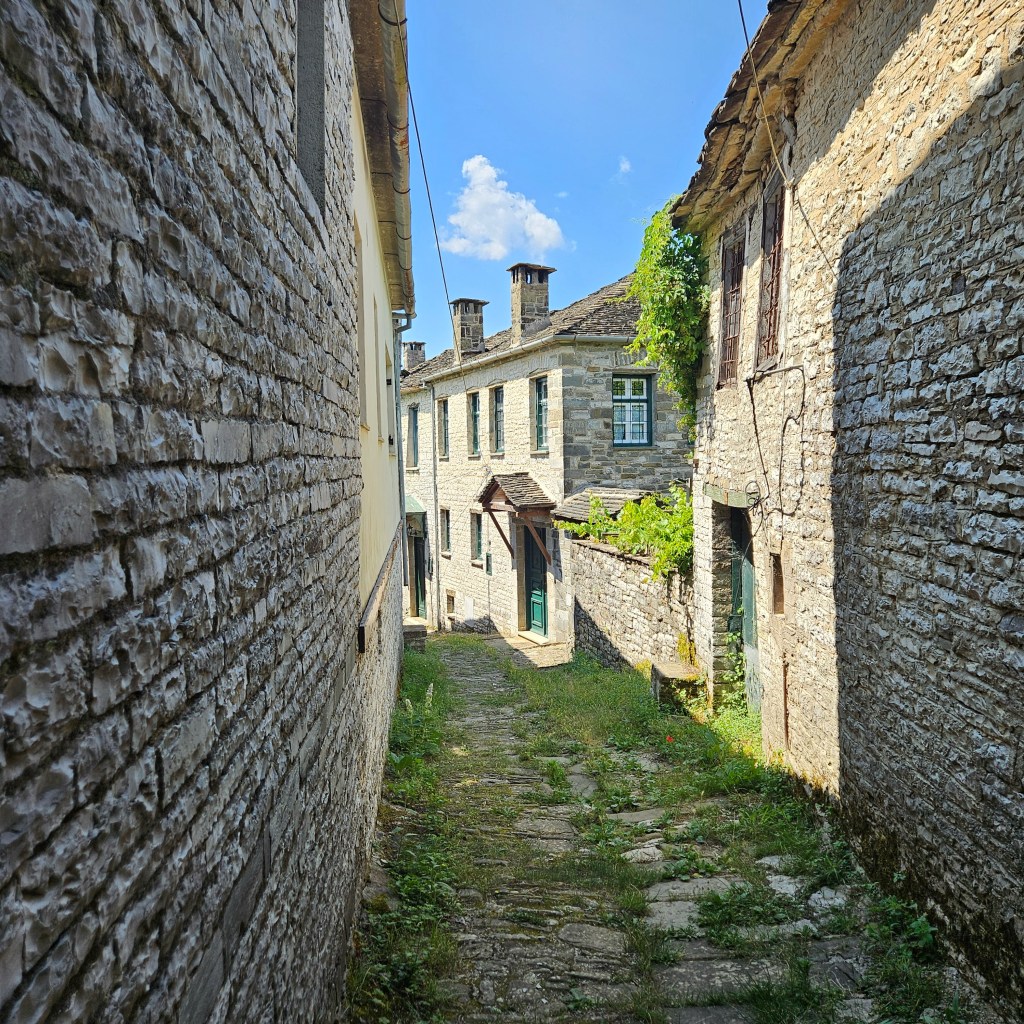
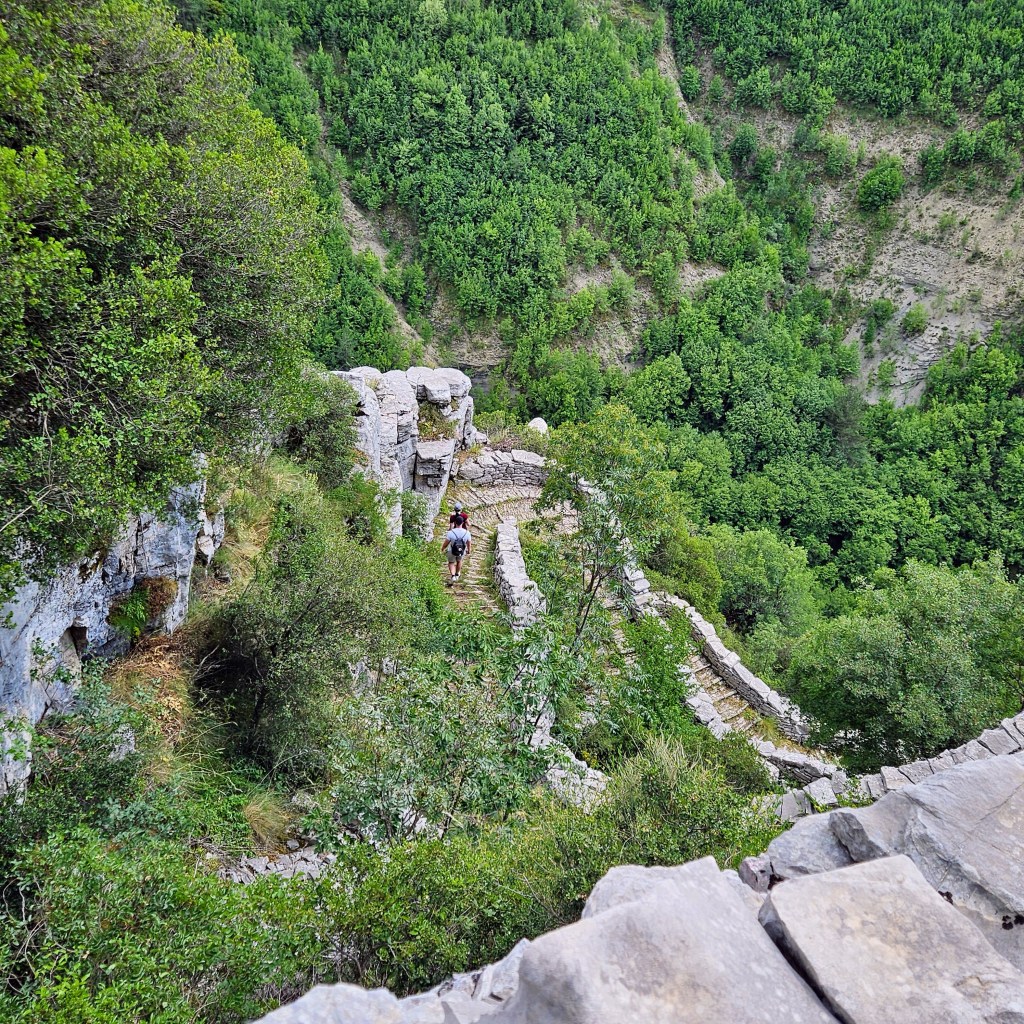
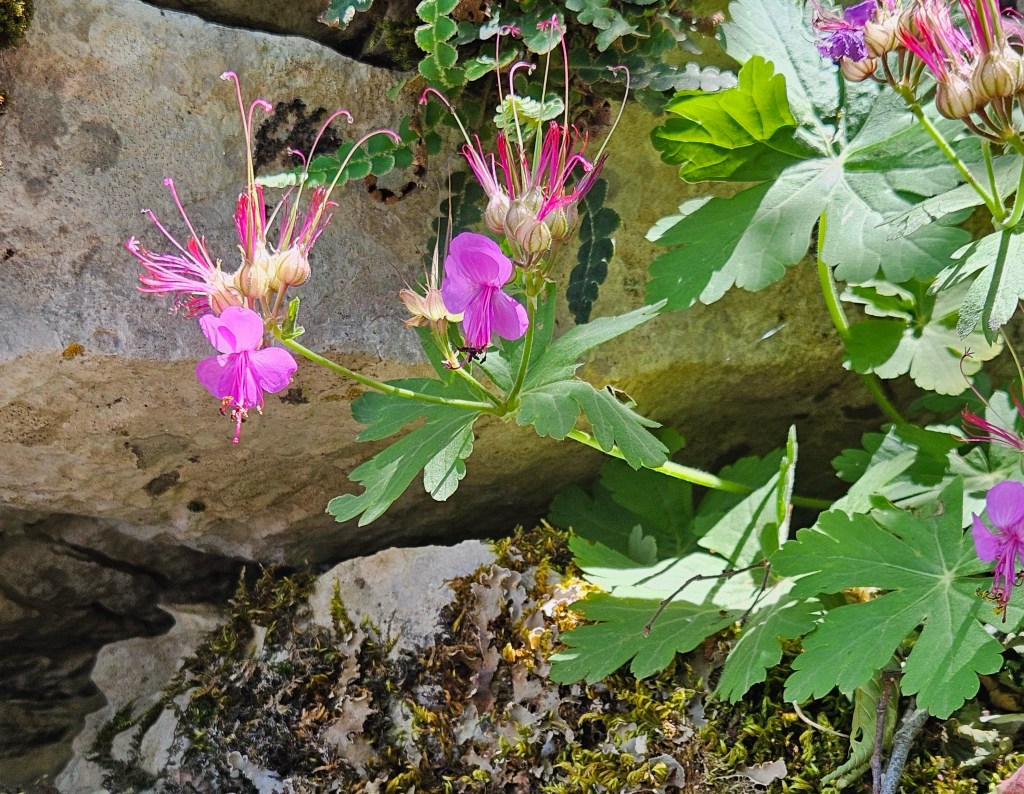
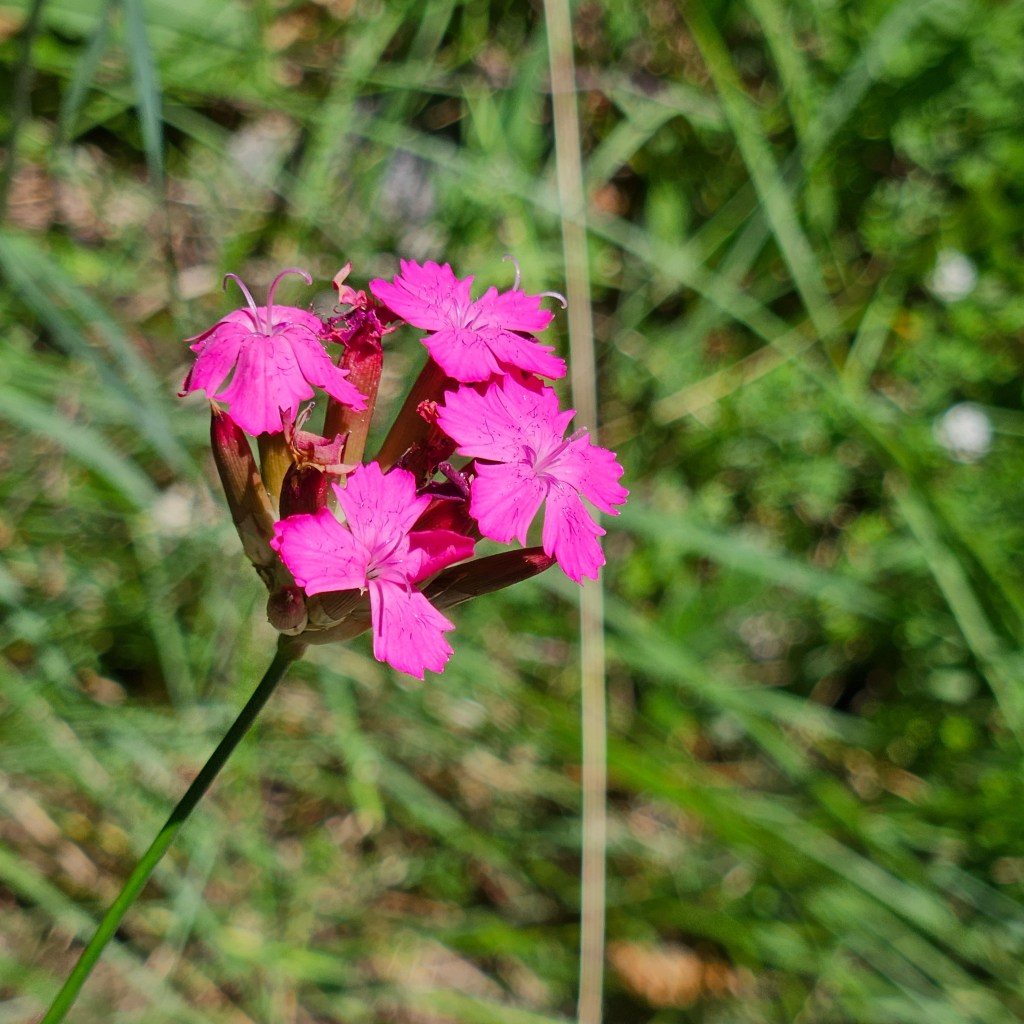
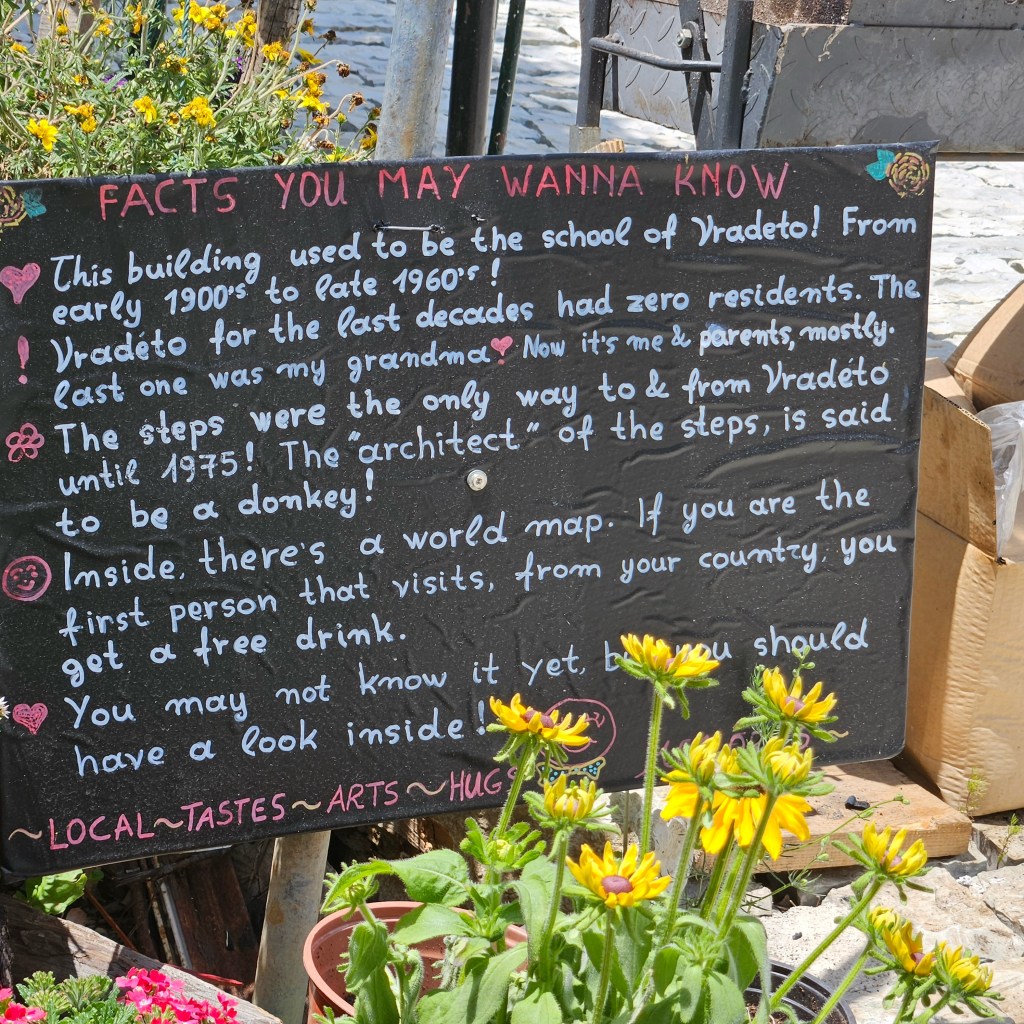
Besides Vikos Gorge, the other main attraction is the stone bridges built during the 18th and 19th centuries. As Zagoria lacked roads until the 1970s, the only way to travel between villages was by footpath or even stone staircases built by hand zip zagging up the mountainsides. And to cross the rivers, local wealthy benefactors financed the building of exquisite stone bridges. For “fun” you can still hike the old trails from village to village. One trail in particular climbs from the village of Kapesovo up a 1500 foot stone staircase to the tiny village of Vradeto, population 3, where the family runs a funky little cafe. Interestingly, the stones provide refugia for many endemic flowers as they safe from grazing and have a nice sunny spot with water trickling through the limestone.
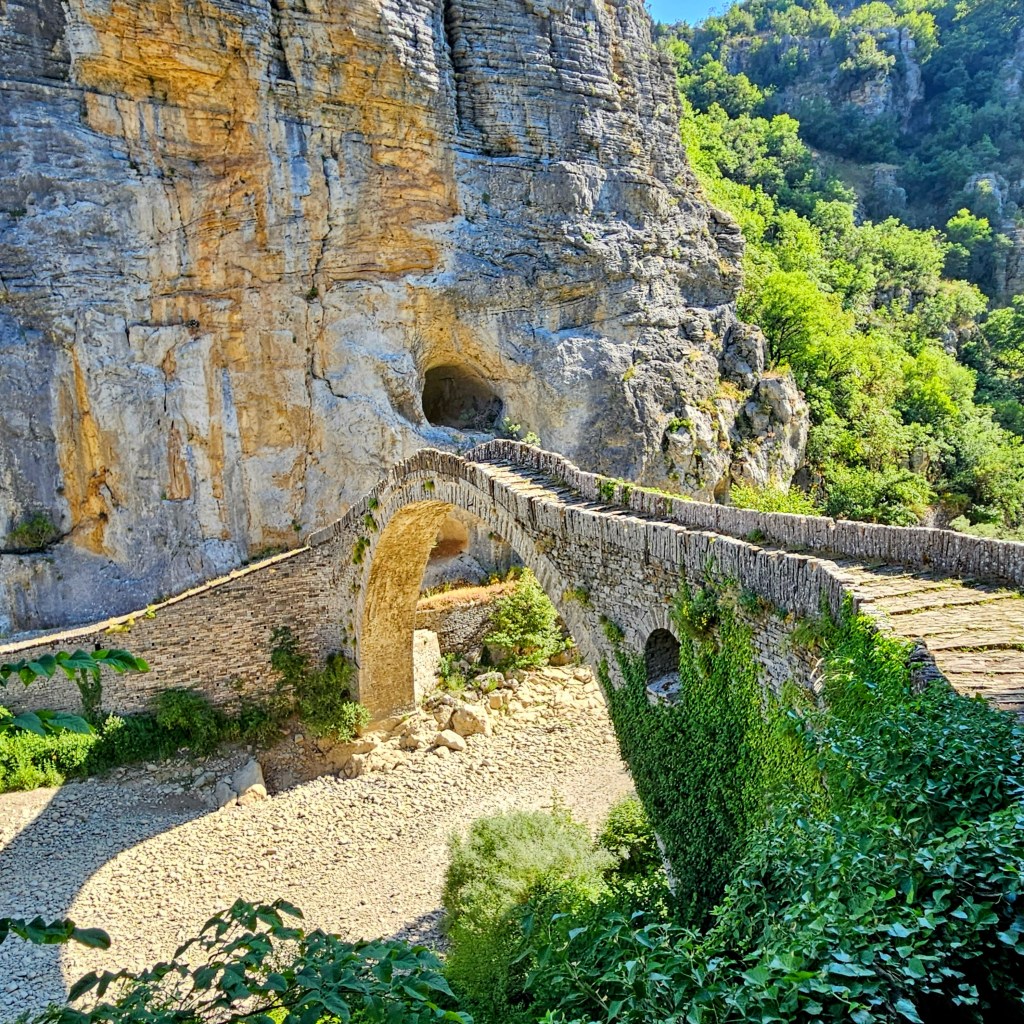


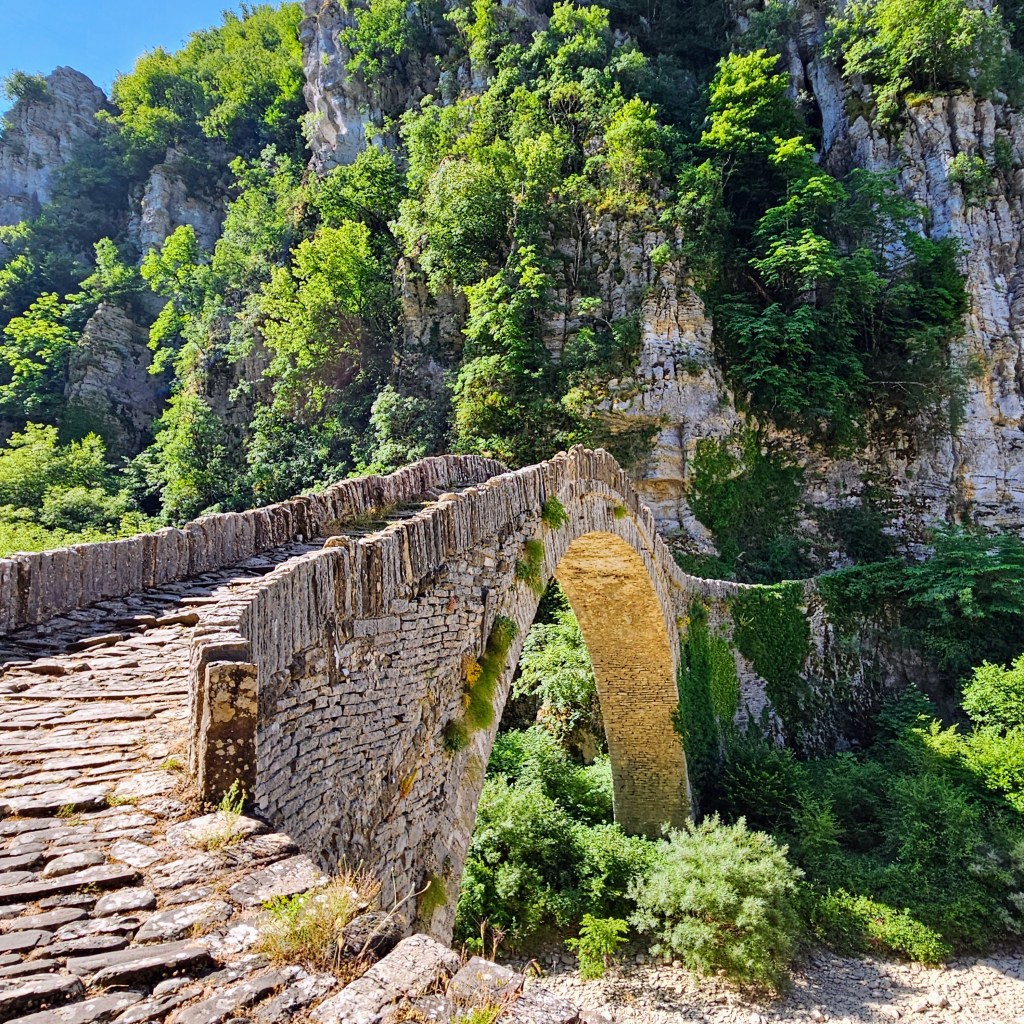





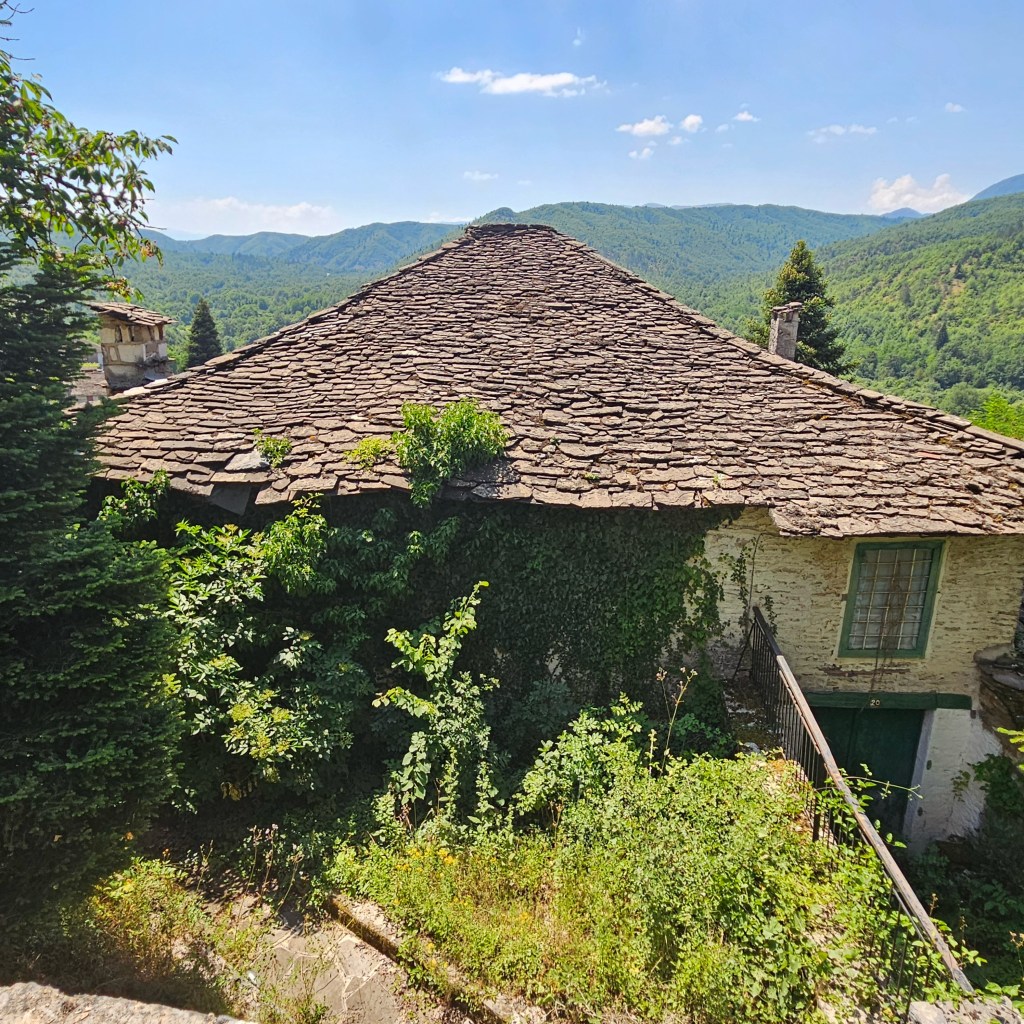
My final stop before leaving Zagoria was the little village of Kiki, where I walked around the steep narrow streets past many shuttered and abandoned houses. Even the boutique hotels were closed. Only one hotel on the main road seemed open and the village tavern/café was the only place with people, about 10 older men having their mid day coffee and cigarettes and chatting away. A few tourists come and go while I eat lunch, but I guess less than 20% of the houses were occupied.
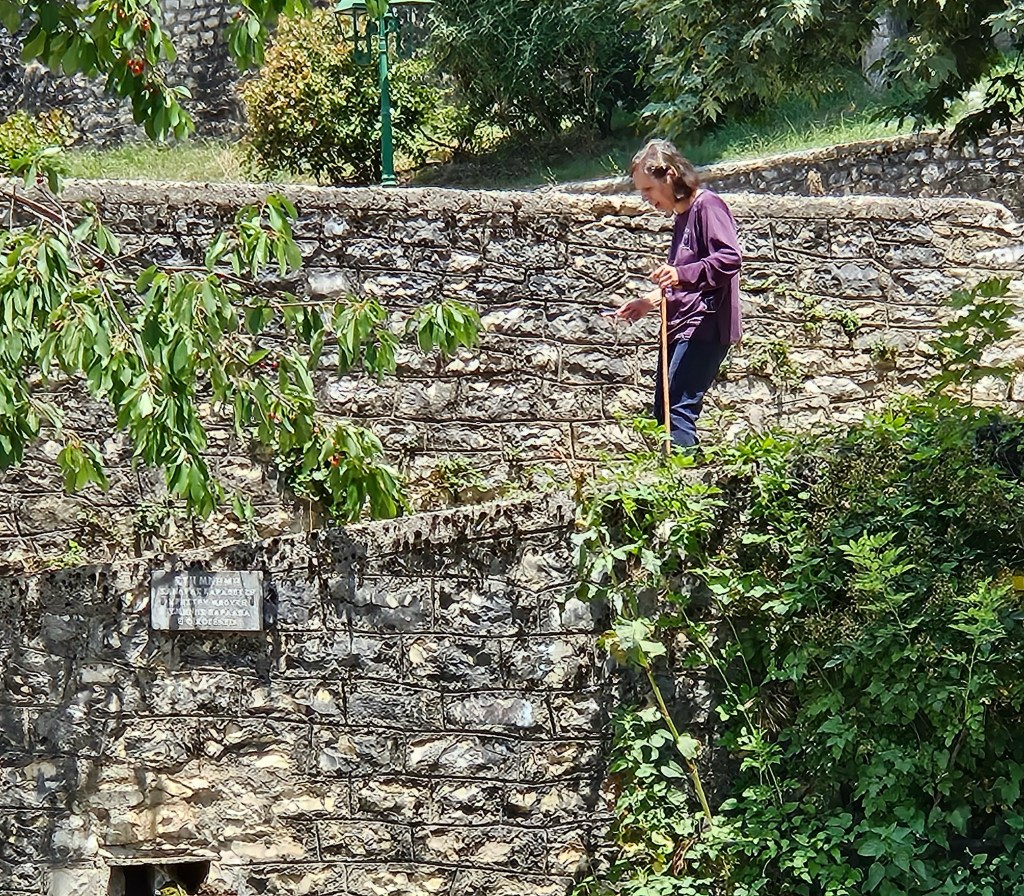
Descending down from Zagoria, I happened to pass by the park information center and decided to stop in. Other than a big map and a couple of traditional outfits from the 19th nomadic women , it’s pretty sparse. The woman staffing the place must be a bit bored as she gives me a full rundown on the park. I didn’t have the heart to tell her I’d already been here for 3 days. But then I asked her which was her village and she stated talking about growing up here. Just like the guy on the bridge, people here will totally open up about Zagoria given half a chance. In fact it sem that most Greeks are happy to talk at length about anything.
The woman, and I should have caught her name, lives in the nearby city of Ioannina, but is from one of the villages, which had over 300 people when she was growing up, but is down to 37. Everyone is leaving the villages except the old people and while they don’t want to leave it’s just a matter of time. There’s no hospital and just one doctor who makes a rounds through the villages every few weeks. Nor are there really any stores, and just a few schools but if “kids want to take guitar lessons or play football they have to go to Ioannina.” She said she takes her kids up to the village in the summer so they can play outside, and “that’s more important that guitar or football, even if there’s no hospitals you don’t need psychiatric care.”
She said her grandmother had 12 children who all lived to adulthood. One of her uncle’s still lives in the village and he’s 90 and won’t leave. When he was little, before the roads were built, it was a 12 hour walk over the mountains to reach Ioannina. Th e only way around Zagoria was by foot.
With the ond houses now owned by generations of siblings it’s hard to know what to do, no one wants to pay the upkeep and they don’t want to sell. Even if they were buyers. “In a few years, it will like a museum,” she added.
As far as the park itself, Aoos-Vikos employs a “European model,” consisting of three core reserves including Vikos Gorge, where human activity is highly restricted. Camping, hunting, and even swimming in the rivers are prohibited. These are surrounded y the species conservation zone, the mountains and forests, where some herding and firewood collection, and selective logging occurs. The the zone of villages, roads, minor infrastructure, cultural and historical landmarks and practices. The finally a peripheral zone.
 Rewilding Urban Rivers
Leave a comment